
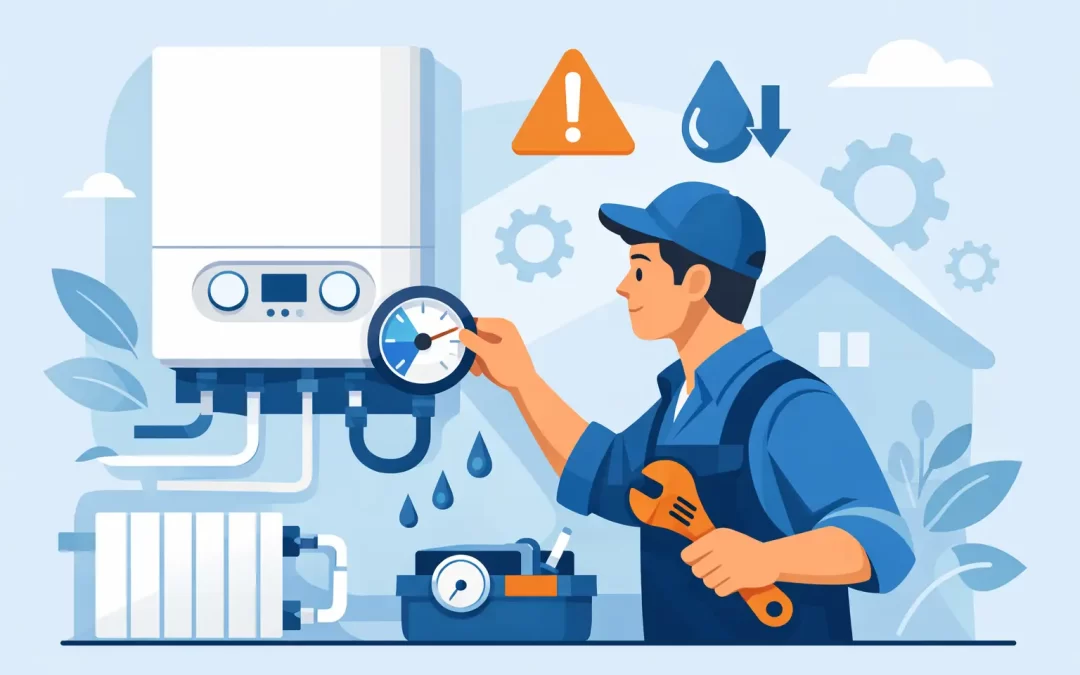
You notice the radiators are only getting lukewarm, the boiler is showing a fault code, or the pressure gauge has dropped into the red. If you are wondering how to fix low boiler pressure, the good news is that in many cases it is straightforward. The key is knowing what is normal, what you can safely check yourself, and when the problem points to a fault that needs professional attention.
Most modern domestic boilers work best when the pressure sits around 1 to 1.5 bar when the system is cold. A small rise when the heating is on is normal. If the pressure falls too low, the boiler may stop working properly or lock out altogether to protect itself. That means no heating, no hot water, and a problem that tends to happen at the worst possible time.
How to fix low boiler pressure step by step
Before touching anything, check your boiler manual if you have it. Different makes and models can vary slightly. That said, the basic process is often similar across many combi and system boilers.
Start by looking at the pressure gauge on the front of the boiler. If it is below 1 bar, the system likely needs repressurising. On many boilers, you do this using the filling loop – usually a silver flexible hose with one or two small valves underneath the boiler, or an integrated filling key depending on the model.
First, make sure the heating is off and the boiler has had a little time to cool down. Then open the filling loop valves slowly. You should hear water entering the system. Keep one eye on the pressure gauge as it rises. Once it reaches around 1 to 1.5 bar, close the valves firmly but without forcing them. If you leave them open, the pressure can climb too high, which creates a different problem.
After that, reset the boiler if needed. Many models will start working again straight away, while others need a reset button pressed. If the pressure has returned to normal and stays there, you have probably solved the issue.
If your boiler uses an internal filling key rather than a braided hose, the steps are similar, but the key must be inserted and turned correctly before opening the valve. If you are unsure, do not guess. Using the wrong control can cause damage or over-pressurise the system.
What causes low boiler pressure?
Repressurising the system may get the heating back on, but it does not always explain why the pressure dropped in the first place. Sometimes it is a one-off, especially after bleeding radiators or carrying out heating work. In other cases, it is a sign of an ongoing fault.
One of the most common causes is recent radiator bleeding. Letting trapped air out of radiators also reduces water pressure in the system. That is normal, and topping the pressure back up is usually all that is needed.
A small leak somewhere in the heating system is another likely cause. This could be from a radiator valve, pipe joint, towel rail, or even pipework hidden under floors. Small leaks are not always dramatic. You may only notice a stain, a slight damp patch, corrosion on pipework, or pressure that keeps dropping every few days.
A faulty pressure relief valve can also be to blame. If this valve has opened because the system was over-pressurised, it may not reseal properly. Water can then continue to drip outside through the discharge pipe, causing the boiler pressure to fall again.
On some systems, the issue sits inside the boiler itself. A failed expansion vessel, for example, can lead to unstable pressure that drops when the system cools and rises sharply when it heats up. That is not a DIY repair and should be checked by a Gas Safe engineer.
Checks you can do safely at home
There are a few sensible checks you can carry out before booking a repair. Look around radiators, valves and visible pipework for any signs of leakage. Check beneath the boiler too. Even a slow drip matters over time.
If you have recently bled radiators, that may explain the drop. If so, repressurising the boiler once may be all that is required. Keep an eye on the gauge over the next few days.
It is also worth checking the external discharge pipe if you can do so safely. If water is dripping from it even when the heating is off, that can suggest a pressure relief valve issue.
What you should not do is remove the boiler casing, interfere with internal components, or keep topping the pressure up repeatedly without investigating the cause. If the pressure drops again and again, there is a fault somewhere, and repeated filling can make it worse.
When low pressure is not a simple top-up job
Knowing how to fix low boiler pressure is useful, but there is a point where a quick refill stops being the right answer. If the pressure drops again within a short time, the system is losing water. Boilers are sealed systems, so pressure should not disappear for no reason.
You should arrange a professional check if the boiler keeps locking out, you spot leaks, the pressure rises too high when the heating comes on, or the filling loop does not seem to work properly. The same applies if you are not confident identifying the correct valves. A wrong turn can leave you with high pressure, water leaks, or damage to the system.
For landlords and property managers, repeated pressure loss should be dealt with promptly. Tenants may initially report poor heating rather than boiler pressure itself, so early inspection helps avoid a larger breakdown and protects the property from water damage.
Common mistakes to avoid
The biggest mistake is adding too much water. If the pressure goes well above the recommended range, the system may discharge water through the safety valve. This can leave you back where you started, or create a fresh fault.
Another common issue is forgetting to close the filling loop valves fully. Even a slightly open valve can cause pressure problems. In some cases, it can lead to constant topping up and strain on system components.
People also sometimes assume low pressure always means the boiler is faulty. It depends. If the system has been bled recently, the fix may be simple. If there is a leak or failed internal part, repressurising is only a temporary measure.
Finally, do not ignore the problem if it keeps returning. Boiler pressure that drops repeatedly is a symptom, not the root issue.
How to fix low boiler pressure on older systems
Older heating systems can be a bit less predictable. Gauges may be less clear, filling arrangements may differ, and hidden wear in radiators or valves is more common. If you live in an older property in London or the surrounding counties, pressure loss may be linked to ageing components rather than a one-off pressure drop.
In these homes, a proper diagnosis often saves time and money. A slow leak under floorboards, a tired expansion vessel, or corrosion in older radiators can all cause the same symptom. Simply topping up the pressure over and over will not solve any of them.
This is also where servicing matters. An annual boiler service can pick up issues before they turn into a no-heat breakdown, particularly during colder months when the system is under more demand.
When to call a Gas Safe engineer
If you have repressurised the system once and it stays stable, you may not need anything else. If it drops again, there is usually more going on. That is the point to bring in a qualified engineer.
A Gas Safe registered engineer can test the system properly, check for visible and hidden leaks, inspect the expansion vessel, assess the pressure relief valve, and make sure the boiler is operating safely. For homeowners, that means less guesswork. For landlords, it means getting the fault resolved properly and keeping the heating reliable for occupants.
At CKT Boilers, this is the kind of issue we see regularly across domestic and light commercial properties. In many cases, the pressure loss itself is easy to correct. Finding the reason it happened is what prevents the same fault from coming back.
Low boiler pressure is often fixable, but it should not be brushed aside if it becomes a pattern. A quick top-up can restore heating today. A proper repair keeps it reliable tomorrow.