If your current boiler is ageing, breaking down or costing more to run each winter, the gas boiler vs electric boiler question becomes very real very quickly. The right choice depends on more than headline efficiency figures. It comes down to your property, your existing system, your energy bills and how you actually use your heating and hot water day to day.
For many households across London and the South East, gas remains the practical choice because it suits established central heating systems and tends to be cheaper to run. But electric boilers can make sense in the right property, especially where there is no mains gas supply, space is limited or a simpler installation is needed. The key is understanding where each option works well and where it can become an expensive compromise.
Gas boiler vs electric boiler: the core difference
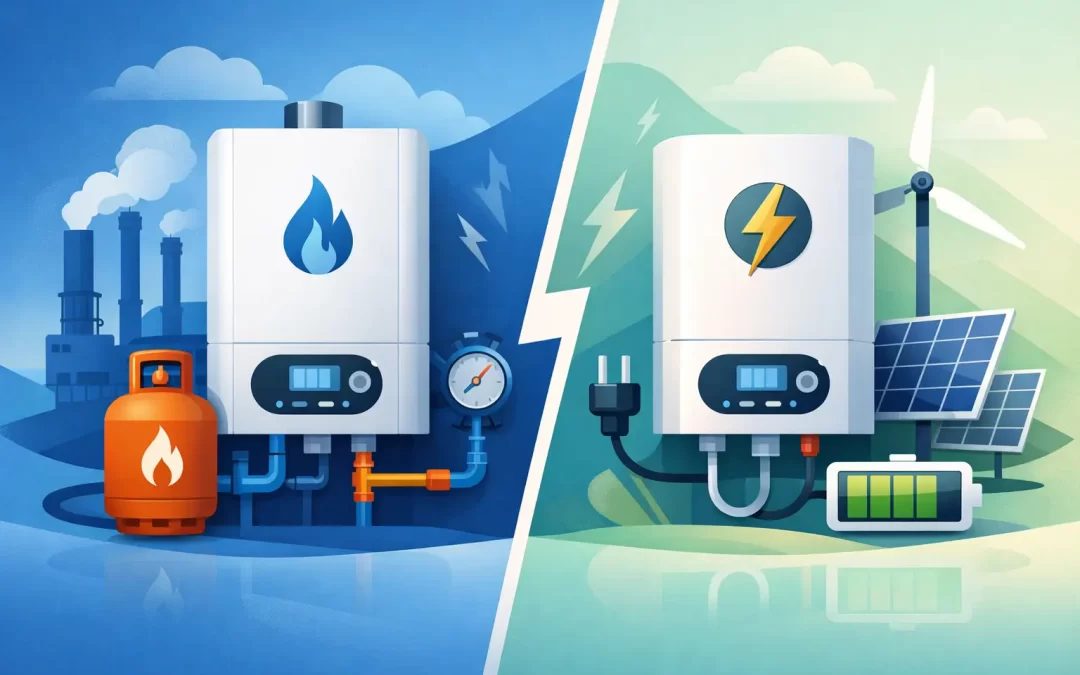
A gas boiler burns natural gas to heat water for your radiators and taps. An electric boiler uses electricity instead, with heating elements warming the water inside the unit. Both can provide central heating and hot water, depending on the setup, but they do it in very different ways.
On paper, electric boilers often look extremely efficient because almost all the electricity used is converted into heat. That sounds attractive, but efficiency at appliance level is only part of the story. Unit-for-unit, electricity is usually much more expensive than gas in the UK, so a system can be efficient and still cost more to run.
Gas boilers, particularly modern condensing models, are also highly efficient and in many homes they strike a better balance between performance and running costs. They are also the familiar option for most properties already connected to the gas network.
Running costs matter more than most people expect
For most homeowners and landlords, running cost is where the decision starts to separate. If you heat a typical family home with several radiators and regular hot water demand, a gas boiler will usually be cheaper to operate than an electric boiler.
That is not because electric boilers are poor quality. In fact, they are often compact, quiet and mechanically simpler. The issue is the price of electricity compared with gas. If your home needs a lot of heat over the colder months, those higher electricity rates can add up fast.
This matters even more in larger properties, homes with higher heat loss, or households where hot water demand is consistent throughout the day. In those cases, electric can become a costly long-term option unless the property is very well insulated or has a specific setup that makes it viable.
There are exceptions. In a small flat with modest heating demand, or in a property used only occasionally, the difference may feel less significant. But for full-time family living, gas usually wins on day-to-day cost.
Installation costs and disruption
Electric boilers are often easier and quicker to install. They do not need a flue, they do not burn fuel, and they do not require a gas supply. That can reduce installation complexity, especially in smaller homes or properties where gas is not available.
If you are replacing an old gas boiler with another gas boiler, though, the picture changes. A like-for-like gas replacement is often straightforward because the pipework, radiators and controls are already designed around that system. In many homes, changing from gas to electric would mean looking beyond the boiler itself and considering whether the electrical supply is suitable for the demand.
That point is easy to overlook. Electric boilers can draw a substantial electrical load, so the consumer unit, cabling and overall supply need to be assessed properly. In some homes, upgrades may be required before installation can go ahead safely.
For landlords and homeowners planning a fast, practical replacement, gas can often be the less disruptive route if the property already runs on gas. It fits the existing setup and avoids unnecessary changes elsewhere.
Performance in larger homes
A boiler needs to do more than simply work. It needs to keep the house warm consistently and provide enough hot water when demand is high. This is where gas boilers usually have the edge, especially in medium and larger homes.
If your property has multiple bedrooms, several radiators and more than one bathroom, the heating load is likely to be too great for an electric boiler to feel like the best fit. Electric boilers can heat a home effectively, but they are generally better suited to smaller properties or lower-demand applications.
A gas boiler is typically better placed to support stronger overall system output, particularly during cold weather when the heating is running hard. For busy households, that reliability matters. Nobody wants to find that a system looked fine on paper but struggles during the first proper cold snap in January.
Space, noise and practical advantages
Electric boilers do offer some appealing practical benefits. They are usually compact, quiet and do not need a flue or condensate arrangements in the same way as gas models. In homes where space is tight, that can help.
They also avoid combustion, which means there is no risk of carbon monoxide from the appliance itself. That does not remove the need for proper professional installation, but it can simplify some aspects of the setup.
For certain properties, that simplicity is the main reason electric makes sense. A small flat, an outbuilding, an annexe, or a property off the gas grid may all be reasonable candidates. In those situations, the convenience of electric can outweigh the higher running cost.
Maintenance, servicing and lifespan
Gas boilers must be serviced regularly by a Gas Safe registered engineer. That is essential for safety, efficiency and manufacturer requirements. A well-maintained gas boiler can provide dependable service for many years, but it does need ongoing professional attention.
Electric boilers generally have fewer moving parts and can be simpler internally, which may reduce some maintenance needs. Even so, they still need checking and should not be treated as fit-and-forget appliances. Any heating system benefits from proper inspection, especially when linked to a pressurised central heating setup.
The real question is not which one avoids maintenance altogether, because neither does. It is whether the ongoing servicing requirements are justified by the system performance and running costs you need. In many homes, the answer still points to gas.
What about carbon emissions?
This is often where the gas boiler vs electric boiler discussion becomes less straightforward. Electric boilers are sometimes seen as the greener option because they do not burn fuel on site. That is partly true, but the full environmental picture depends on how the electricity is generated and how efficient your home is overall.
As the UK electricity grid continues to shift towards lower-carbon generation, electric heating may become more attractive from an emissions point of view. But that does not automatically make an electric boiler the best upgrade today for every property.
If replacing an old, inefficient gas boiler with a modern A-rated gas model significantly improves efficiency and heating control, that can still be a sensible step. The greener choice is not always the one that sounds most modern. It is the one that suits the building, the budget and the real-world energy demand.
Which homes suit each option?
Gas boilers are usually the better fit for houses already connected to mains gas, homes with standard radiator systems, and households with regular heating and hot water demand. They are especially practical where a direct replacement is needed and keeping running costs under control is a priority.
Electric boilers are often better suited to smaller properties, homes without a gas supply, occasional-use buildings, and situations where flueing a gas appliance would be difficult. They can also be a neat solution where space is limited and demand is relatively modest.
The mistake is assuming one type is automatically better in all cases. It depends on the property. A compact flat in London and a family house in Berkshire will not always suit the same answer.
Choosing properly means looking beyond the boiler
A good recommendation should consider the full heating system, not just the boiler on the wall. Radiator sizes, insulation levels, hot water requirements, existing pipework, electrical capacity and future plans for the property all matter.
That is why professional assessment is so important before making a final decision. A boiler that is cheap to fit but expensive to run may not be the bargain it first appears. Equally, a system that looks familiar may not be the best long-term option if the property layout or energy setup points another way.
At CKT Boilers, this is exactly the sort of practical conversation that helps customers avoid the wrong choice. The best boiler is not the one with the strongest sales pitch. It is the one that gives you dependable heating, sensible bills and confidence that the system is right for your home.
If you are weighing up a replacement, think less about what is theoretically best and more about what will keep your property warm, safe and cost-effective over the years ahead.