
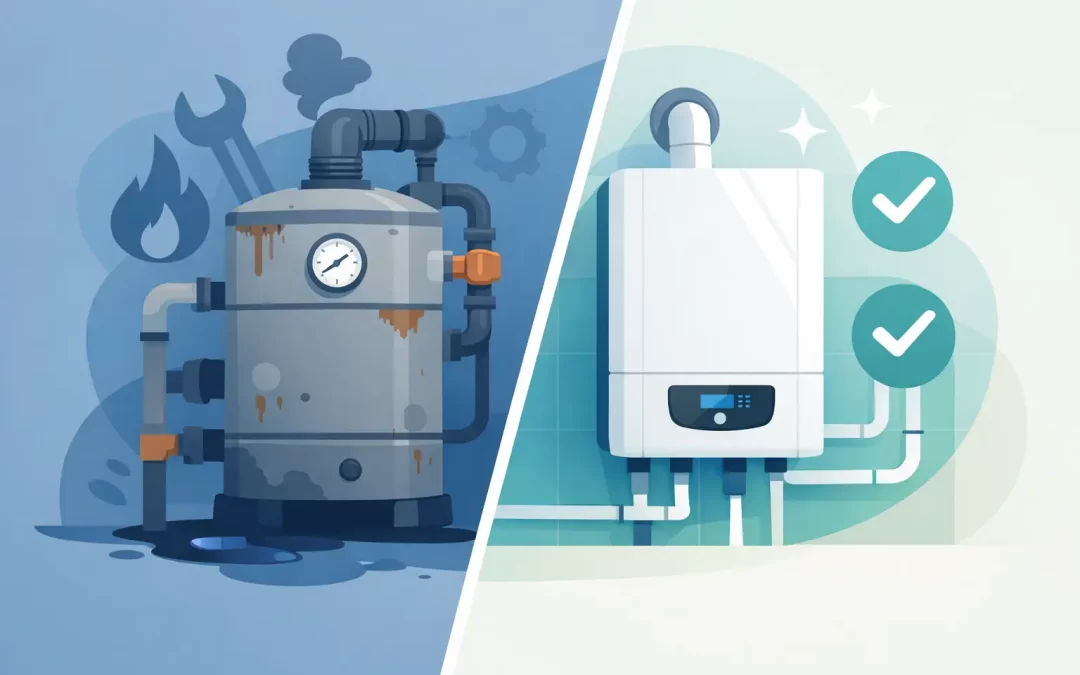
A boiler replacement before and after can feel like two very different homes. Before, you may be listening for unusual noises, topping up pressure, waiting for radiators to warm up or worrying whether the hot water will last through the morning. After a properly planned replacement, the change is usually simpler than people expect: dependable heat, more consistent hot water and a system that is easier to run.
For homeowners and landlords across London and the South East, replacing a boiler is not only about fitting a newer appliance. It is an opportunity to correct problems in the wider heating system, improve efficiency and make sure the installation is safe, compliant and suited to the property.
Before boiler replacement: the signs a system is struggling
A boiler does not need to stop working completely before replacement becomes the sensible option. Many older boilers continue to provide heating and hot water, but do so less efficiently and with a growing risk of failure. Repeated repairs can quickly become costly, particularly when parts are difficult to source or the boiler is approaching the end of its expected working life.
Common warning signs include uneven radiator heat, a boiler that regularly loses pressure, banging or whistling noises, discoloured water around the unit, or hot water that runs hot and cold. An unexplained rise in gas use can also point to an inefficient boiler or heating system. None of these issues automatically means replacement is required. A qualified engineer should first assess whether a repair is safe, worthwhile and likely to provide a lasting result.
Age matters, but it is not the only factor. A well-maintained boiler may remain reliable for years, while a poorly maintained newer model can develop faults early. The key question is whether the cost and disruption of ongoing repairs still make sense compared with installing a modern boiler with a manufacturer’s warranty.
What the old installation often reveals
The condition of the boiler is only part of the picture. Before replacement, an engineer will look at the pipework, flue route, controls, radiators and system water. Sludge and debris inside central heating pipework can reduce circulation, leaving rooms slow to heat even when the boiler itself is working.
Older controls can also limit comfort and efficiency. If your heating is controlled by a basic timer and room thermostat, you may be heating rooms when nobody is home or struggling to maintain a comfortable temperature. A replacement project is a sensible time to consider modern heating controls that give you clearer control over schedules and temperatures.
The boiler replacement process: what happens on the day
A professional installation starts well before the engineer arrives with the new boiler. The right boiler type and output should be selected for the property, the number of bathrooms, likely hot water demand and the existing system. A small flat with one bathroom has very different requirements from a family house where two showers may be used at the same time.
On installation day, the engineer will protect the working area, isolate the gas and electrical supplies where required, and safely remove the old boiler. The new boiler is then installed in the agreed location or, where appropriate, moved to a more practical position. Moving a boiler can create more space or improve access, but it can also increase the work involved because pipework, the flue and condensate drainage may need altering.
The installation should include the correct safety components, a compliant flue arrangement and suitable condensate drainage. The heating system is refilled, checked for leaks and commissioned in line with the manufacturer’s instructions. This is not a box-ticking exercise. Correct commissioning helps protect the warranty and ensures the boiler is set up to operate as intended.
Before leaving, the engineer should explain the controls, show you how to adjust heating and hot water settings, and provide the relevant paperwork. Gas work must be carried out by a Gas Safe registered engineer. It is one of the clearest ways to protect your household, tenants and property.
Boiler replacement before and after: the changes you will notice
The most immediate improvement is often reliability. Instead of wondering whether the boiler will reset after another fault code, you should have heating and hot water that respond consistently when needed. Modern boilers are designed to modulate their output, meaning they can reduce their firing rate when full power is not necessary. This helps avoid the stop-start operation associated with less efficient older systems.
You may also notice that radiators warm more evenly, especially if the system has been cleaned and balanced as part of the installation. A powerflush or other appropriate cleaning method may be recommended where system water is heavily contaminated. It is not required in every case, but ignoring dirty system water can compromise the performance of a new boiler.
Hot water performance depends on the boiler type. A modern combi boiler can provide mains-pressure hot water without a separate cylinder, making it a popular choice for smaller and medium-sized homes. However, if a larger household regularly uses more than one shower at once, a system boiler with an unvented cylinder may offer better hot water capacity. The best result is not always the smallest or cheapest boiler. It is the system that matches how the household actually lives.
Will a new boiler reduce energy bills?
A new boiler can reduce gas use when it replaces an old, inefficient model, particularly where the old system is poorly controlled or frequently cycling. The amount saved depends on the age and condition of the previous boiler, insulation levels, the property’s heat loss, household routines and how the new controls are used.
It is sensible to see lower energy consumption as a likely benefit rather than a guaranteed figure. Turning the thermostat higher after installation, heating more rooms or spending more time at home can offset some of the savings. The practical benefit is that you have greater control over your heating, with a boiler that is better able to convert gas into useful warmth.
Choices that affect the final result
The difference between an adequate boiler replacement and an excellent one often comes down to planning. Boiler location, flue position, condensate drainage and access for future servicing all matter. A unit squeezed into an awkward cupboard may be possible, but it still needs proper clearances and safe access.
Controls should be chosen around the occupants too. A landlord may need straightforward, durable controls that tenants can use easily. A busy family may prefer programmable settings that fit school and work routines. For a property with several zones or an extension that is warmer than the original house, separate controls can help avoid wasting heat.
Radiators deserve attention as well. If several are cold at the bottom, fail to heat fully or are undersized for the room, fitting a new boiler alone will not solve every comfort issue. Replacing selected radiators, fitting thermostatic radiator valves or repairing circulation faults can make the whole system work better.
Looking after the system after installation
The aftercare period is where the benefits of a new boiler are protected. Keep the system pressure within the range explained by the engineer, use the controls rather than constantly switching the boiler on and off, and arrange annual servicing. Regular servicing helps identify developing issues early and is normally required to maintain the manufacturer warranty.
If you notice pressure loss, unusual noises, a frozen condensate pipe in cold weather or a fault code, do not ignore it. Early advice can prevent a smaller issue becoming a no-heating or no-hot-water emergency. For landlords, planned servicing and clear records are particularly valuable for meeting responsibilities and avoiding disruption for tenants.
CKT Boilers approaches replacements with the wider heating system in mind, from safe Gas Safe installation and manufacturer-compliant commissioning to controls, radiators and system cleaning where needed. That joined-up approach matters because a new boiler should not be asked to compensate for problems elsewhere in the system.
A boiler replacement is a significant home decision, but it should leave you with fewer worries, not more. The right installation gives you reliable warmth on cold mornings, hot water when the household needs it and confidence that the system has been fitted properly for the years ahead.