A boiler can be working perfectly while parts of your home still feel cold. If radiators are warm at the top but cold at the bottom, some rooms take too long to heat up, or you are regularly bleeding radiators, sludge within the system may be the cause. This guide to power flushing benefits explained sets out what the process does, when it is worthwhile and what homeowners and landlords can realistically expect.
What is power flushing?
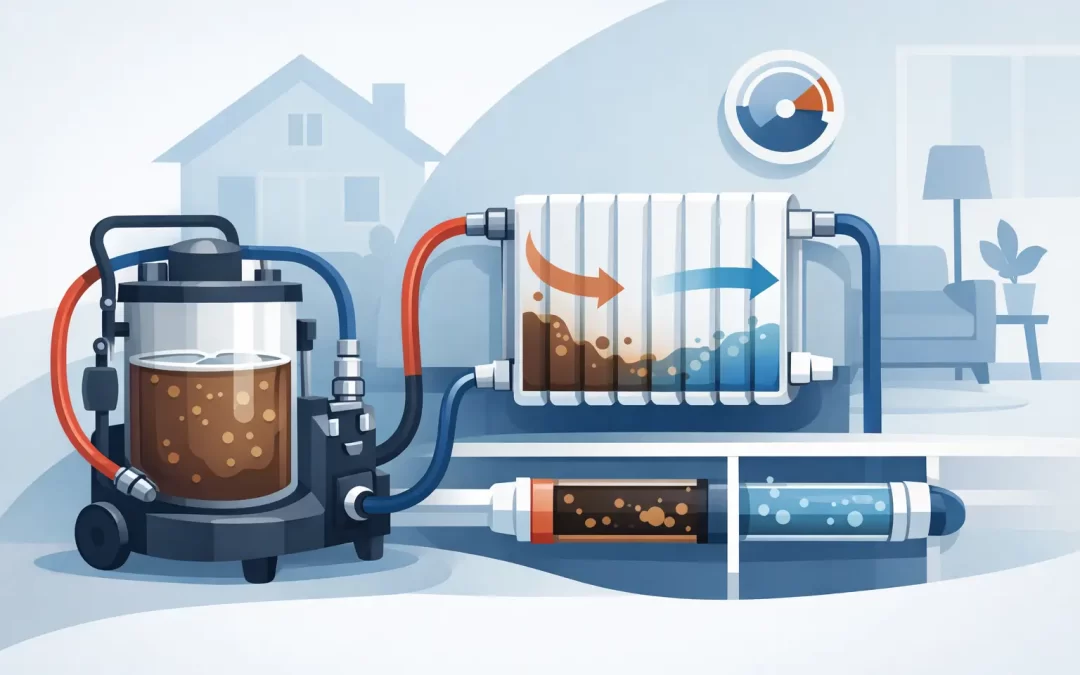
Power flushing is a professional clean for a wet central heating system. An engineer connects a specialist pump to the system and circulates water and cleaning chemicals at a controlled flow. This dislodges and removes the black sludge, rust particles, limescale and other debris that can build up in radiators, pipework and boiler components over time.
That black sludge is usually magnetite, a by-product of internal corrosion. Small amounts can gradually collect in low-flow areas, especially at the bottom of radiators. As the buildup gets worse, it restricts the movement of heating water around the system. Your boiler must then work harder to achieve the temperature set on the thermostat.
A power flush is more thorough than simply draining a system or bleeding a radiator. Draining removes some water, but it will not necessarily shift compacted debris from radiators and pipework. After cleaning, the engineer refills the system, adds inhibitor to help slow future corrosion and checks that the heating is circulating correctly.
Power flushing benefits explained: what you may notice
The main purpose of a power flush is to restore efficient circulation. The results vary according to the age and condition of the system, but there are several clear benefits when sludge is the underlying issue.
More even radiator heat
A clean system allows hot water to reach radiators more freely. Cold patches may improve, and radiators that have struggled to warm up can begin heating more evenly. This can make a particular difference in larger homes, properties with extended pipe runs and older systems where some rooms have always felt cooler than others.
It is worth being realistic, though. A power flush cannot correct a radiator that is undersized for the room, a faulty thermostatic radiator valve or poor insulation. It solves circulation problems caused by contamination, not every heating issue in a property.
Better boiler protection
Modern boilers contain narrow waterways and sensitive components that do not respond well to dirty system water. Sludge can contribute to blockages in the heat exchanger, pump, filters and valves. Cleaning the system helps reduce the debris moving through these parts.
This matters particularly when fitting a new boiler to an existing heating system. Manufacturers commonly require the system to be properly cleaned and treated as part of a compliant installation. Failing to deal with contaminated water can shorten component life and may create avoidable warranty issues later on.
Potentially lower heating costs
When radiators heat efficiently, the boiler may not need to run for as long to bring rooms up to temperature. That can reduce wasted energy and support lower heating costs. The size of any saving depends on your boiler, controls, property insulation, heating habits and the extent of the blockage, so it should not be treated as a fixed promise.
Even so, there is a practical comfort benefit. A system that responds more quickly is easier to control, whether you are heating a family home, a rented property or a small commercial space.
Fewer recurring heating problems
Dirty heating water can be linked to noisy circulation, sticking valves, repeated cold spots and blockages. Removing debris can reduce the likelihood of these problems returning immediately. Adding a suitable inhibitor after the flush is just as important, as it helps protect the freshly cleaned system from further corrosion.
For many homes, fitting or servicing a magnetic system filter is also sensible. It captures circulating magnetic debris before it reaches the boiler. A filter does not replace a power flush where heavy sludge is already present, but it can help keep clean water cleaner for longer.
Signs your central heating system may need a power flush
Not every heating fault calls for power flushing. A qualified engineer should assess the system rather than recommend a flush as a default solution. However, the following signs often justify a closer inspection:
- Radiators are cold at the bottom or have persistent cold areas.
- Some rooms take much longer to warm up than others.
- The boiler, pump or pipework makes banging, kettling or gurgling noises.
- You need to bleed radiators frequently, or the water released is dark and dirty.
- A boiler has suffered repeated circulation-related faults, or a new boiler is being installed on an old system.
A heating engineer may test the water, inspect the filter if one is fitted and check radiator temperatures before deciding on the best course of action. In some cases, a single radiator clean, valve replacement, balancing adjustment or repair is the more appropriate and less disruptive option.
What power flushing will not fix
Power flushing is valuable when contamination is restricting the system, but it is not a cure-all. It will not repair a leaking radiator, failed pump, damaged heat exchanger, faulty programmer, defective thermostat or gas-related boiler fault. It also cannot permanently resolve problems caused by incorrectly designed pipework.
Very old systems need particular care. If corrosion has weakened radiators or pipe joints, removing sludge can occasionally reveal an existing leak that had been partially sealed by deposits. That does not mean the flush caused the underlying issue, but it is a genuine consideration. An experienced engineer should explain the condition of the system and any likely risks before work begins.
Where a boiler is beyond economical repair, investing in a flush alone may not be the best use of your budget. The right approach may involve a replacement boiler, selected radiator upgrades, a system clean and improved controls. A proper assessment helps you avoid paying for work that does not address the real cause of the problem.
What happens during a professional power flush?
A power flush is usually completed in a day, although larger properties, heavily contaminated systems and complicated layouts can take longer. The engineer will protect the working area, connect flushing equipment safely and work through the system in stages. Individual radiators may be agitated or isolated to help release stubborn deposits.
The dirty water is removed responsibly and the system is repeatedly rinsed until it is substantially cleaner. The engineer then refills it, adds inhibitor and checks for correct pressure, heat distribution and radiator operation. If a magnetic filter is present, it should be cleaned as part of ongoing boiler servicing.
You should expect clear communication about the condition of your system, the work being carried out and any faults found along the way. Heating work is not just about getting warmth back quickly. It should also protect your property and give you confidence that the system is being looked after properly.
Is it worth power flushing a newer system?
Newer systems can benefit too, particularly if they have not been treated with inhibitor, have suffered a component failure or show evidence of dirty water. However, a well-installed and regularly maintained system may only need routine filter cleaning and water-quality checks rather than a full flush.
The best time to consider the work is before problems become severe, when replacing a boiler or when radiator performance has noticeably declined. Landlords may also find it useful when preparing a property for new tenants, as reliable heating reduces the risk of avoidable call-outs during colder months.
CKT Boilers recommends assessing the symptoms and system condition first, rather than assuming every cold radiator needs the same remedy. A targeted, professional approach can restore comfort without unnecessary work.
If your heating has become slow, noisy or uneven, do not simply turn the thermostat higher and hope for the best. Having the system checked early can identify whether a power flush, a smaller repair or a control adjustment will give your home the dependable warmth it needs.