If some radiators stay cold while others are scorching, your boiler is becoming noisy, or you are repeatedly bleeding black water from the system, the choice between a powerflush vs chemical flush can make a real difference. Both aim to remove sludge and debris from central heating pipework, radiators and components. However, they do not provide the same level of cleaning, and the right option depends on the condition of your system.
A heating engineer should assess the system before recommending either service. Choosing the cheaper option without checking what is happening inside the pipework can leave the underlying circulation problem unresolved – and may put extra strain on your boiler.
Powerflush vs chemical flush: the main difference
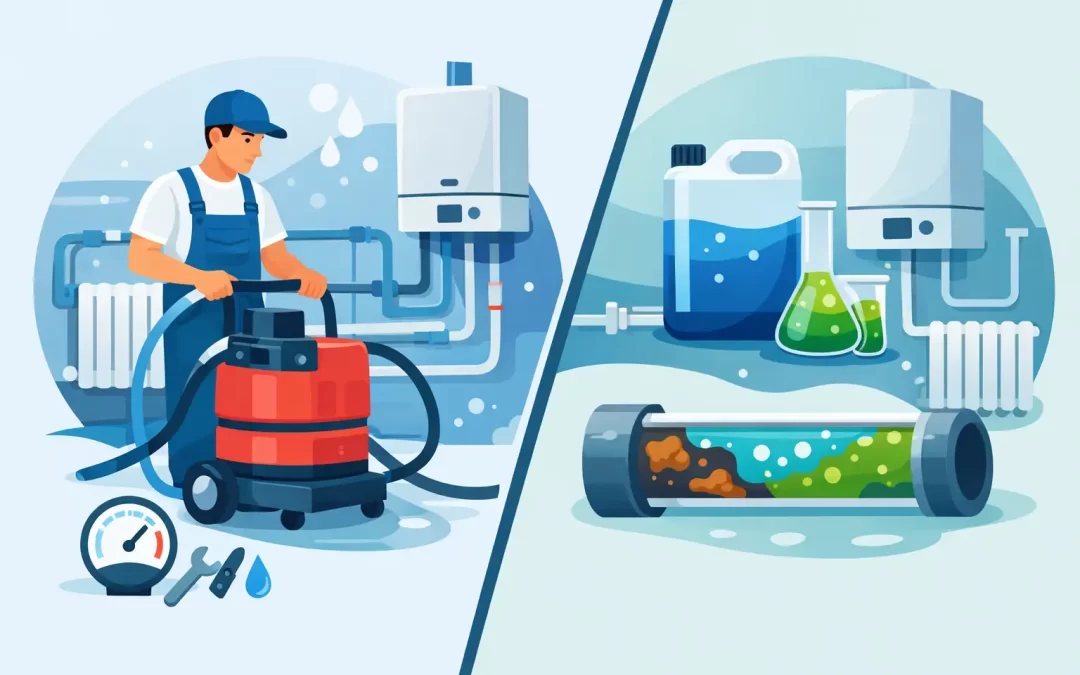
A chemical flush uses a specialist cleaning chemical to loosen sludge, limescale and corrosion deposits. The cleaner is added to the heating system and allowed to circulate, often while the heating is operating normally. The system is then drained and refilled, with inhibitor added to help protect it from future corrosion.
A powerflush is a more intensive cleaning process. An engineer connects a purpose-built flushing machine to the system. It moves water and cleaning chemicals around the pipework at a high flow rate but low pressure, helping dislodge and carry away stubborn debris. Each radiator can be worked on individually, and the engineer can reverse the flow to target blockages more effectively.
The terms can sometimes cause confusion because a powerflush usually involves chemical cleaners too. The key distinction is the method of circulation and the depth of cleaning. A chemical flush relies largely on the system’s own pump and normal flow. A powerflush uses dedicated equipment to clean more thoroughly.
When a chemical flush may be enough
A chemical flush can be a sensible option for a relatively modern system with mild contamination. For example, it may be suitable after a small repair, when replacing a single radiator, or as preventative maintenance where there are no major heating performance issues.
It can also be appropriate where the water is slightly discoloured but radiators heat evenly, the boiler is working reliably and there is no sign of significant sludge build-up. In these cases, a good-quality system cleaner followed by fresh inhibitor may improve water quality without the disruption or cost of a full powerflush.
That said, a chemical flush is not a shortcut for a badly contaminated system. If sludge has settled in radiator bottoms, narrowed pipework or affected components such as the pump, diverter valve or heat exchanger, gentle circulation may not shift enough debris. The heating may improve for a short period, but cold spots and boiler faults can return.
When a powerflush is the better choice
A powerflush is usually recommended where there is clear evidence of heavy sludge or poor circulation. It is particularly valuable before fitting a new boiler onto an older heating system. Modern boilers have more compact internal waterways than many older models, so contamination left in existing pipes and radiators can quickly cause problems.
Signs that a powerflush may be needed include:
- radiators that are cold at the bottom or have persistent cold areas
- several radiators taking a long time to warm up
- black, dirty water when a radiator is bled or removed
- boiler kettling, banging or unusual circulation noises
- frequent pump, valve or heat exchanger issues
- a system that has never been cleaned and is many years old
A professional powerflush is not simply a machine connected for a few hours. The engineer should check the system, protect sensitive components where necessary, flush through until the discharged water is clear, and confirm that radiators are heating properly afterwards. Once the system is clean, inhibitor should be added to slow down internal corrosion.
Is a powerflush always necessary with a new boiler?
Not always, but the existing system should always be considered carefully. Boiler manufacturers expect the heating system to be clean and treated correctly. If a new boiler is installed onto old, dirty pipework, debris can be drawn into the new appliance and affect efficiency, reliability and potentially the warranty position.
Where the system water is clean and the heating has been well maintained, a chemical clean may be sufficient. Where water testing, radiator symptoms or the age of the system point to significant contamination, a powerflush offers stronger protection for the new installation.
This is why a proper survey matters. A qualified engineer can inspect the system, discuss its service history and recommend cleaning based on evidence rather than applying the same solution to every home.
What does each process involve?
With a chemical flush, the cleaner is added to the system and circulated for the time specified by the product and the system condition. The engineer then drains the system, flushes it through, refills it and doses it with inhibitor. Depending on the approach used, this may be completed alongside other heating work or over a planned visit.
During a powerflush, the engineer connects a flushing machine at a suitable point, often at the pump location or another accessible connection. Cleaning chemicals may be introduced first, then the machine circulates water through the system. Radiators are isolated and flushed one at a time where needed, with flow reversed to release settled sludge. A magnetic filter can help capture metallic debris during the process.
The system is then refilled, vented, pressure-checked and treated with inhibitor. The final stage matters just as much as the cleaning itself. Without inhibitor, fresh corrosion can start developing again from the moment untreated water enters the system.
Cost, disruption and the condition of your heating
A chemical flush generally costs less because it requires less equipment and time. It can be a practical choice where contamination is light and the system is performing well. A powerflush costs more because it is more labour-intensive and needs specialist equipment, but it can prevent larger repair bills where sludge is already affecting circulation.
The size of the property, number of radiators, accessibility, age of the system and any existing faults all affect the price and duration. A heavily sludged system may reveal underlying issues, such as a leaking radiator valve or a weak pump, once proper circulation is restored. This is not a reason to avoid cleaning – it is a reason to allow for an honest assessment before work starts.
For landlords, a clean and protected heating system can also reduce avoidable call-outs during colder months. For homeowners, it can mean more even warmth, quicker radiator heat-up and less risk of a boiler being asked to work harder than it should.
Can a powerflush damage old radiators or pipework?
A correctly carried out powerflush is designed to work at low pressure, so it should not damage sound heating components. However, it can expose weaknesses that were already present. A radiator, valve or joint that has been held together by sludge may begin to leak once deposits are removed and normal circulation returns.
An experienced heating engineer will assess the system first and explain any concerns, especially in older properties with ageing radiators or vulnerable pipework. In some cases, replacing a badly corroded radiator may be more sensible than spending time trying to clean it.
How to keep the system cleaner for longer
After either service, inhibitor is essential. This protective treatment reduces corrosion inside radiators and pipework. A magnetic system filter is also worth considering, particularly with a newer boiler or a system that has previously suffered from black sludge. It catches magnetic debris before it reaches key boiler components.
Regular boiler servicing, checking the condition of system water and dealing with small leaks promptly all help. Repeatedly topping up a sealed heating system introduces fresh oxygenated water, which encourages corrosion. If the pressure keeps dropping, have the cause investigated rather than simply repressurising it again and again.
For homes across London and the South East, CKT Boilers can assess poor radiator performance and recommend the most appropriate cleaning method for the system in front of you. The aim is not to sell a powerflush where a chemical clean will do, but to leave you with reliable heating, protected equipment and confidence when the temperature drops.
The best next step is simple: if your radiators are uneven, your boiler is noisy or you are planning a replacement boiler, arrange a professional system assessment before the problem turns into a cold house or an avoidable repair.