
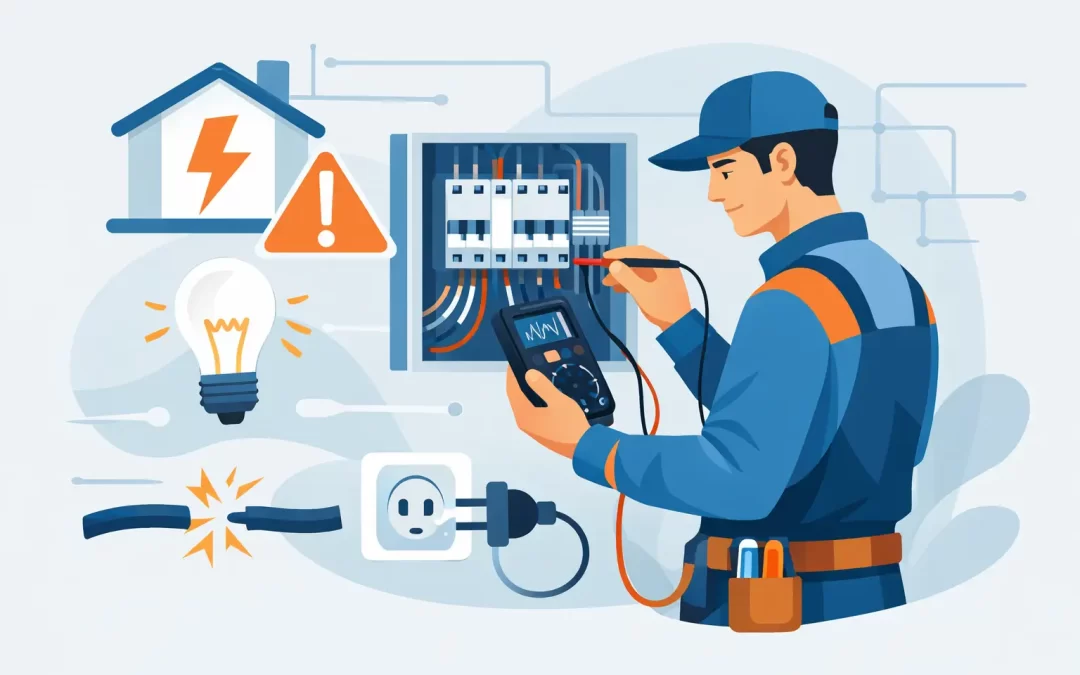
A socket that suddenly stops working, lights that flicker for no clear reason, or a fuse board that keeps tripping can turn a normal day into a stressful one very quickly. An electrical fault finding service is designed to get to the root of those problems safely, without guesswork, and to make sure your property is not left with a hidden risk.
For homeowners, landlords and small business premises, electrical faults are rarely just an inconvenience. They can affect safety, disrupt daily routines and, in some cases, point to wider issues within the wiring or electrical installation. The challenge is that the symptom you notice is not always the actual cause. A tripping circuit might be down to a faulty appliance, damaged cable, a worn accessory, moisture ingress or an overloaded circuit. Proper diagnosis matters.
What an electrical fault finding service actually covers
An electrical fault finding service is the process of inspecting, testing and tracing an electrical problem to identify exactly what is causing it. That may sound straightforward, but electrical systems often need a methodical approach. The visible issue is only one part of the picture.
A qualified electrician will usually begin by asking what has been happening, when the fault started, whether it affects one area or several, and whether any work or changes were carried out recently. From there, they can test circuits, consumer units, sockets, lighting points, switches and connected equipment to narrow the problem down.
In some cases, the fix is simple once the fault is found. In others, diagnosis may uncover a deeper issue such as ageing wiring, poor previous workmanship or components that no longer meet current safety expectations. That is why a proper investigation is worth doing rather than simply resetting a breaker and hoping for the best.
Common signs you may need electrical fault finding service
Some electrical problems are obvious. Others build gradually and are easy to ignore until they become more serious. If your electrics are showing repeated warning signs, it is sensible to have them checked sooner rather than later.
Frequent tripping at the consumer unit is one of the clearest indicators. If a breaker or RCD keeps switching off, it is doing its job by responding to a fault. Constantly turning it back on without knowing why is not a real solution.
Flickering lights are another common issue. Sometimes the cause is minor, such as a failing lamp or loose fitting. At other times, it can point to a poor connection, circuit fault or voltage issue that needs proper testing.
You might also notice sockets that stop working, burning smells near outlets, buzzing sounds from switches, electric showers that trip power, or outdoor electrics behaving unpredictably in wet weather. Landlords may also need fault diagnosis after tenant reports, between tenancies, or when preparing a property for inspection and compliance checks.
Why electrical faults are not always where they seem
One of the main reasons people call in an electrician is that the fault does not make sense. A kitchen circuit may trip only when a certain appliance is used. Upstairs lights may fail even though the issue is actually at the consumer unit. A bathroom extractor fan may appear to be the problem when the real cause is tied to the lighting circuit.
This is where experience matters. Electrical systems are interconnected, and one weakness can affect performance elsewhere. It is also common in older properties across London and the South East to find additions and alterations carried out over many years. Extensions, new kitchens, shower installations and garden electrics can all leave behind mixed standards of workmanship if not completed properly.
An electrician carrying out fault finding is not only looking for what has failed today. They are also assessing whether the installation shows signs of wear, overloading, damage or earlier work that may contribute to future faults.
What to expect during a fault diagnosis visit
A professional visit should feel clear and organised, not confusing. The first priority is safety. If there is an immediate hazard, the affected circuit or area may need to be isolated before further testing begins.
After that, the electrician will inspect the relevant parts of the installation and use appropriate test equipment to trace the problem. Depending on the nature of the fault, this might involve checking continuity, insulation resistance, polarity, earthing arrangements and the condition of accessories and circuit protection.
Some faults are found quite quickly. Others take longer because they are intermittent or only appear when certain equipment is in use. That is not unusual. A proper diagnosis is often a process of ruling out possible causes one by one until the source is confirmed.
Once the issue is identified, you should be given a straightforward explanation of what has been found, what needs repairing or replacing, and whether any further remedial work is recommended. Good service is not about burying customers in technical terms. It is about explaining the problem clearly so you can make an informed decision.
Repair or bigger electrical work – it depends on the fault
Not every electrical fault leads to major work. In many cases, the solution may be relatively contained, such as replacing a damaged socket, repairing a faulty connection, changing a breaker or isolating a defective appliance.
That said, there are times when fault finding reveals wider concerns. Older fuse boards, deteriorated cabling, poorly installed circuits or a lack of proper earthing may require more substantial remedial work. If a property has recurring problems in different areas, it can be a sign that the installation needs more than a one-off repair.
This is especially relevant in older homes and rental properties where the electrics may have been adapted over decades. A targeted repair can solve the immediate issue, but if the underlying system is tired or unsafe, a broader upgrade may be the more sensible long-term option.
Choosing a qualified electrician for fault finding
Electrical diagnosis is not just about finding a fault quickly. It is about finding it safely and fixing it properly. That makes the choice of contractor important.
Look for a qualified electrician with experience in domestic and light commercial work, someone who can investigate methodically rather than jumping to conclusions. Reliability matters too. When power problems affect lighting, sockets, heating controls or hot water systems, delays can be disruptive.
It also helps to use a company that understands the wider systems in a property. For example, faults can sometimes affect boilers, programmers, immersion heaters, pumps and other electrical components linked to heating and hot water. A provider with broader property services experience can often give more practical support when issues overlap.
For customers across Middlesex, London and the wider South East, that joined-up approach is one reason many turn to providers such as CKT Boilers for fault diagnosis alongside heating, plumbing and electrical work.
When to call straight away
Some issues should not wait. If you smell burning, see signs of scorching around a socket or switch, experience electric shocks from fittings, lose power repeatedly, or notice water near electrical points, arrange professional help as soon as possible.
The same applies if a circuit will not reset, if lights dim dramatically when appliances are used, or if an electrical fault is affecting essential services such as heating or hot water. These are not problems to ignore overnight and hope for the best.
If you are a landlord, quick attendance is especially important where tenant safety and habitability are involved. The longer an unresolved fault is left, the greater the chance of inconvenience, property damage or avoidable risk.
Preventing repeat faults
Not every fault can be prevented, but many recurring issues are linked to wear, age, damage or earlier poor-quality work. Periodic inspection, sensible loading of circuits and prompt repairs all help reduce the chance of a bigger failure later on.
It is also worth paying attention after any renovation or new installation. If faults begin after a kitchen refit, bathroom work or an extension, that timing may be relevant. Even when the problem seems unrelated, changes to the electrical system can have knock-on effects if circuits have been altered badly or overloaded.
Where a property has persistent electrical problems, a more complete inspection may save time and money in the long run. Repeated call-outs for the same symptoms are frustrating for everyone. A thorough diagnosis gives you a clearer view of the condition of the installation and what should happen next.
Electrical faults have a habit of appearing at the worst possible moment, but they are far easier to deal with when the cause is identified properly. If something in your home or property does not feel right, getting it checked early is often the simplest way to protect both safety and peace of mind.