A hot water cylinder is easy to overlook until the shower turns cold halfway through the morning or there is not enough hot water for the household. This guide to hot water cylinders explains how they work, which type may suit your property and when it is sensible to call a qualified heating engineer.
What does a hot water cylinder do?
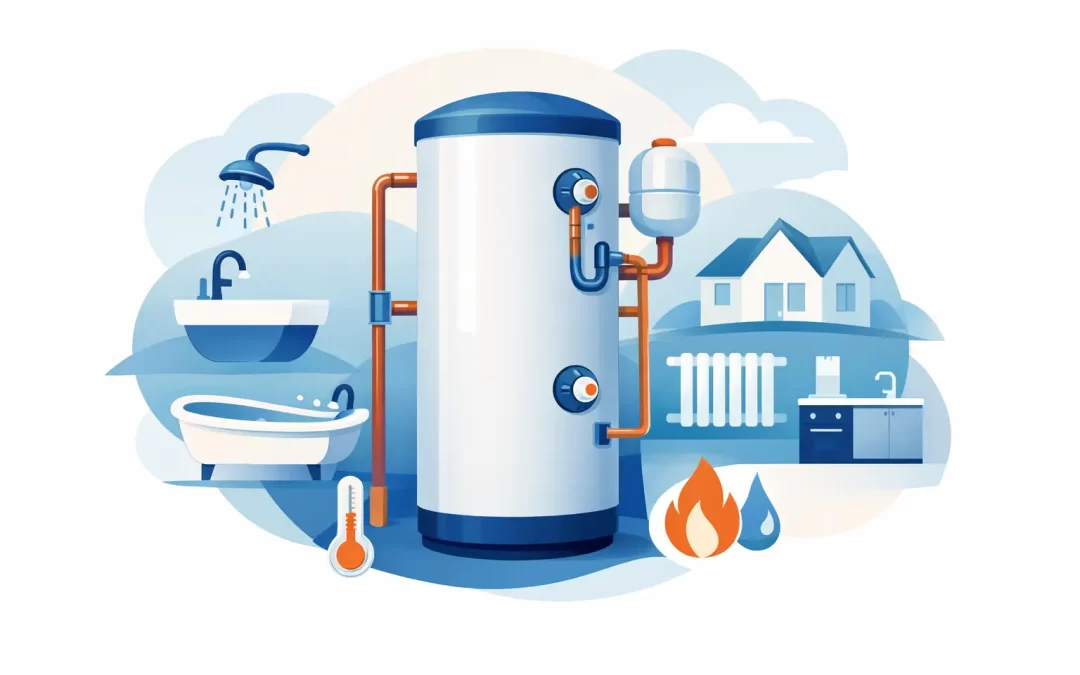
A hot water cylinder stores heated water ready for taps, showers and baths. Unlike a combi boiler, which heats water as it is needed, a cylinder keeps a reserve of hot water for use throughout the day.
This can be particularly useful in larger homes with more than one bathroom, households with several occupants, or properties where multiple showers may run at the same time. A properly sized and installed cylinder can provide a strong, reliable supply without the drop in flow that can occur when demand is high.
The cylinder is normally heated by your boiler through a coil inside the tank. It may also have an electric immersion heater, which can provide a backup heat source or make use of electricity from solar panels. The right arrangement depends on your existing heating system, available space, water pressure and the way your household uses hot water.
Guide to hot water cylinders: the main types
The two choices homeowners most often come across are vented and unvented cylinders. Both store hot water, but they operate differently and have different installation requirements.
Vented cylinders
A vented cylinder is usually fed from a cold-water storage cistern in the loft. It is a familiar arrangement in many older properties across London and the South East. Water pressure at the taps is created by gravity, so the height of the loft tank can affect shower and tap performance.
Vented systems can be practical where an existing gravity-fed system is already in place. However, they take up more room because they require both a cylinder and a cold-water tank. Lower pressure can also be frustrating, especially if you are upgrading a bathroom or want a more powerful shower.
Unvented cylinders
An unvented cylinder is fed directly from the mains water supply. This usually delivers better pressure and flow at hot taps and showers, provided the property has adequate incoming mains pressure and flow rate.
Because an unvented cylinder stores water under pressure, safety controls are essential. Installation and servicing must be carried out by an engineer qualified to work on unvented hot water systems. These units are often an excellent option for homes with two or more bathrooms, but suitability should always be checked before installation rather than assumed.
Direct and indirect cylinders
You may also hear cylinders described as direct or indirect. An indirect cylinder is heated by the central heating boiler through an internal coil. This is the most common setup where a regular or system boiler is installed.
A direct cylinder heats water with electric immersion elements and does not rely on a boiler coil. It can be suitable in some electrically heated properties, although running costs depend on the electricity tariff and how the system is controlled. Some homes use an indirect cylinder with an immersion heater as a useful backup.
Choosing the right cylinder size
Cylinder size is not simply a case of buying the largest tank that will fit in the airing cupboard. An oversized cylinder can cost more to buy and heat, while an undersized one can leave the household waiting for water to reheat.
The starting point is your daily demand. Consider the number of bedrooms and regular occupants, how many bathrooms are in use, whether people tend to shower or bathe, and whether hot water is often used at the same time. A home with one or two occupants and a single shower room may need a far smaller cylinder than a busy family home with two bathrooms.
As a broad indication, a small household may be well served by a cylinder around 120 to 150 litres, while a family property may require 180 to 250 litres or more. These figures are only a guide. The recovery time of the boiler, the cylinder’s heat exchanger and the household’s usage pattern all matter.
For example, a cylinder with a larger, efficient coil can heat up faster when paired with a suitable boiler. That may allow a smaller cylinder to work well in some homes. A heating engineer should assess the whole system, including boiler output, pipework, mains supply and available installation space before recommending a size.
Efficiency and heat loss
Modern cylinders are significantly better insulated than many older models. They retain heat for longer, helping to reduce standing heat loss and avoid unnecessary boiler cycling. If your cylinder feels warm to the touch, has a thin loose-fitting jacket or is showing signs of corrosion, it may be wasting energy.
Look for a well-insulated cylinder with a good energy efficiency rating and controls that match your routine. A correctly set timer means the cylinder heats water when it is most likely to be needed, rather than maintaining a full tank of hot water all day.
Temperature settings matter too. Stored hot water must be hot enough to reduce the risk of harmful bacteria developing in the system. In most domestic setups, the cylinder thermostat is set to around 60°C, with thermostatic mixing valves used where appropriate to reduce the risk of scalding at outlets. Settings should be checked and adjusted by a competent professional if you are unsure.
If you have solar photovoltaic panels, an immersion diverter may allow surplus generated electricity to heat water in the cylinder. This will not suit every property or usage pattern, but it can be a worthwhile conversation when planning wider heating or electrical improvements.
Signs your hot water cylinder needs attention
A cylinder can often give warning signs before it fails completely. Acting early may prevent water damage, loss of hot water or a more disruptive replacement.
Look out for these common issues:
- Hot water running out much sooner than usual
- Water around the cylinder, discharge pipework or nearby fittings
- Rust, staining or corrosion on the tank or connections
- Banging, kettling or unusual noises during heating
- A failed immersion heater or inconsistent water temperature
- Poor pressure from hot taps on a system that previously performed well
Not every problem means the cylinder itself needs replacing. A faulty thermostat, motorised valve, expansion vessel or immersion element may be the cause. Equally, leaks and safety-valve discharge on an unvented system should never be ignored or blocked off. A qualified engineer can identify the fault and advise whether a repair is safe and cost-effective.
Installation, safety and servicing
Replacing a hot water cylinder is a system upgrade, not just a plumbing job. The installer should consider the condition of your boiler, controls, pipework, cold-water supply and discharge arrangements. In an older property, changes may also be needed to bring the installation in line with current requirements.
Unvented cylinders need particular care because of the pressure and stored energy involved. Their safety devices, expansion controls and discharge pipework must be correctly installed and periodically checked. It is worth asking whether the engineer holds the appropriate unvented hot water qualification, rather than choosing on price alone.
Regular servicing can help spot a worn valve, pressure issue or deteriorating component before it causes trouble. This is especially relevant for landlords and managing agents, who need dependable hot water provision and clear maintenance records for their properties.
Is a cylinder right for your home?
A cylinder is often the right answer where there is high hot-water demand, multiple bathrooms or a need to supply several outlets at once. It can also work well with a system boiler and may offer flexibility for immersion heating or future solar integration.
A combi boiler can still be a better fit for a smaller home with limited space and modest hot-water demand. There is no cylinder to accommodate, and water is heated on demand. The trade-off is that a combi has limits when several people need hot water simultaneously.
The best decision comes from looking at how your home is actually used, not from choosing the newest-looking equipment. CKT Boilers can assess your current hot water system and recommend a safe, practical option that suits your property, budget and household routine.
Reliable hot water should feel routine, not something you have to plan around. If your cylinder is ageing, leaking, underperforming or no longer meeting demand, a professional assessment can give you a clear route to a more comfortable home.