A radiator that is hot at the bottom but cold at the top is usually telling you exactly what is wrong. Air has become trapped inside, stopping hot water from circulating as it should. If you are wondering how to bleed radiators properly, the good news is that it is a straightforward job in many homes – as long as you do it carefully and know when a bigger heating issue may be involved.
Bleeding a radiator is one of the simplest ways to improve heating performance. It can help rooms warm up more evenly, reduce strain on your central heating system and stop that familiar gurgling or bubbling noise coming from the pipework. For homeowners and landlords, it is also a useful bit of maintenance to keep on top of before cold weather really sets in.
Why radiators need bleeding
Central heating systems are designed to circulate hot water through radiators efficiently. Over time, small pockets of air can collect inside the system. That air rises to the top of the radiator, leaving part of it unable to fill with hot water.
The result is uneven heating. You may notice the top section stays cool while the lower half gets warm, or one radiator takes much longer than the others to heat up. In some cases, you might hear knocking, trickling or gurgling sounds. If your boiler seems to be working harder but comfort levels have dropped, trapped air is often one of the first things worth checking.
That said, not every cold radiator needs bleeding. If a radiator is cold at the bottom rather than the top, sludge or debris in the system may be the issue. If several radiators are not heating properly, or pressure keeps dropping, the problem could sit elsewhere in the system.
How to tell if your radiator needs bleeding
Before you reach for a radiator key, take a minute to check the symptoms. A radiator often needs bleeding if the top feels noticeably cooler than the bottom after the heating has been on for a while. Another common sign is a radiator that is only partially warm even though the valve is open.
If you are not sure, run your hand carefully near the surface once the heating has warmed the system. Do this with care, as some sections may be hot. A consistent temperature across the whole radiator is what you want. Cool patches at the top usually point to trapped air.
What you need before you start
For most standard radiators, the job requires very little equipment. A radiator bleed key is the main item. Some modern radiators may use a flat-head screwdriver instead, but the standard key is most common in UK homes.
You should also have an old cloth or towel and a small container or bowl ready. Even a quick bleed can release a few drips of dirty water, and it is better to protect carpets, flooring and painted surfaces before you start.
How to bleed radiators properly, step by step
The safest way to do this is slowly and methodically. Start by turning your heating off and allowing the system to cool down. You do not want hot water spraying out under pressure, and a cooler radiator is much easier to work with safely.
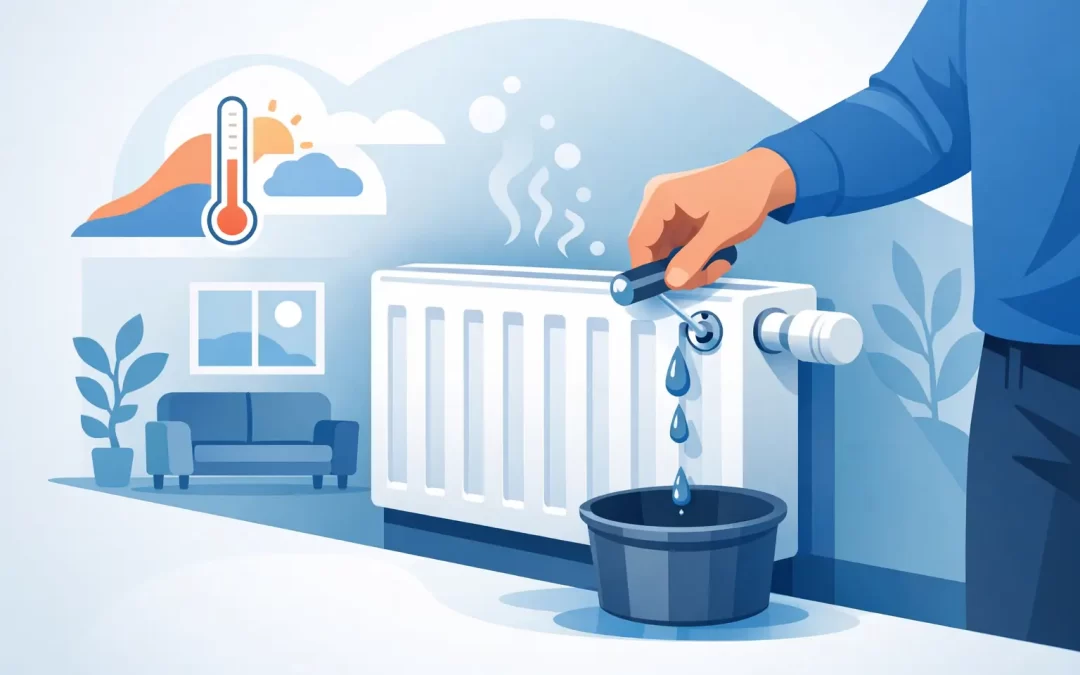
Next, identify the bleed valve. This is usually found at the top corner of the radiator and looks like a small square pin inside a round fitting. Place your towel beneath the valve and hold the bowl underneath if needed.
Insert the radiator key and turn it gently anti-clockwise, usually by no more than a quarter to half turn. You should hear a hissing sound as trapped air begins to escape. That is normal. Do not fully open the valve, as there is no benefit in doing so and it can make a mess quickly.
Once the hissing stops and water starts to come out in a steady stream, close the valve by turning the key clockwise. It only needs to be snug. Overtightening can damage the valve or make it harder to open next time.
Wipe away any water, then move on to the next radiator if needed. When all radiators have been bled, switch the heating back on and check whether they are warming up evenly.
Should you bleed all radiators or just one?
If only one radiator is showing clear signs of trapped air, you may only need to bleed that one. But if your system has not been checked for a while, it can make sense to test the others too, especially upstairs radiators where air tends to collect first.
There is no need to bleed radiators routinely without reason. Too much interference is not helpful. It is better to do it when symptoms appear or as part of sensible seasonal maintenance, such as before autumn turns into winter.
Check your boiler pressure afterwards
One part of how to bleed radiators properly that often gets missed is checking the boiler pressure once the job is done. Bleeding releases air, but it can also reduce system pressure slightly. On a combi or sealed heating system, you should check the pressure gauge after bleeding radiators.
Most boilers operate best around 1 to 1.5 bar when cold, though this can vary depending on the make and model. If the pressure has dropped too low, your heating may not perform correctly and the boiler may even lock out. In that case, you may need to top the system up using the filling loop in line with the manufacturer instructions.
If pressure repeatedly drops after bleeding, that is a sign not to ignore. It may point to a leak, a faulty expansion vessel or another system issue that needs professional attention.
Common mistakes to avoid
The biggest mistake is trying to bleed a radiator while the heating is still on and hot. Even if it seems quicker, it is not worth the risk. Hot water can escape, and it becomes much harder to judge what is happening.
Another common issue is opening the valve too far. A slight turn is enough. If you remove too much air and water too quickly, or struggle to close the valve cleanly, you create an unnecessary mess and can affect system pressure more than needed.
It is also worth avoiding guesswork if the symptoms do not quite fit. A radiator that stays cold after bleeding may not have an air problem at all. Closed valves, stuck pins, sludge build-up or balancing issues can all affect radiator performance.
When bleeding a radiator will not solve it
Bleeding works well for trapped air, but heating systems can develop more than one fault at the same time. If your radiators are cold in patches at the bottom, your system may have sludge or magnetite restricting flow. If one room never seems to heat properly, the system may need balancing. If the boiler keeps losing pressure or making unusual noises, the issue may go beyond the radiator itself.
For landlords, repeated heating complaints from tenants should not be treated as routine radiator bleeding every time. Ongoing poor performance can indicate a wider central heating fault that needs diagnosing properly. For homeowners, the same applies if you have bled radiators more than once and the problem keeps returning.
In those cases, a qualified heating engineer can check pressure levels, valves, circulation, inhibitor levels and whether a powerflush or repair is actually needed. That is usually faster and more cost-effective than treating the symptom over and over again.
A simple job that helps your heating work better
Knowing how to bleed radiators properly is useful because it deals with one of the most common causes of poor radiator performance. It is quick, low-cost and can make a noticeable difference to comfort at home. Still, it only works when trapped air is the real issue, so it is worth paying attention to the signs rather than assuming every cold radiator needs the same fix.
If you bleed a radiator and the heat returns evenly, that is usually job done. If not, your heating system may be asking for more than a simple DIY adjustment. A warm home should not be hit and miss, especially when the weather turns and you need the system to work first time.