
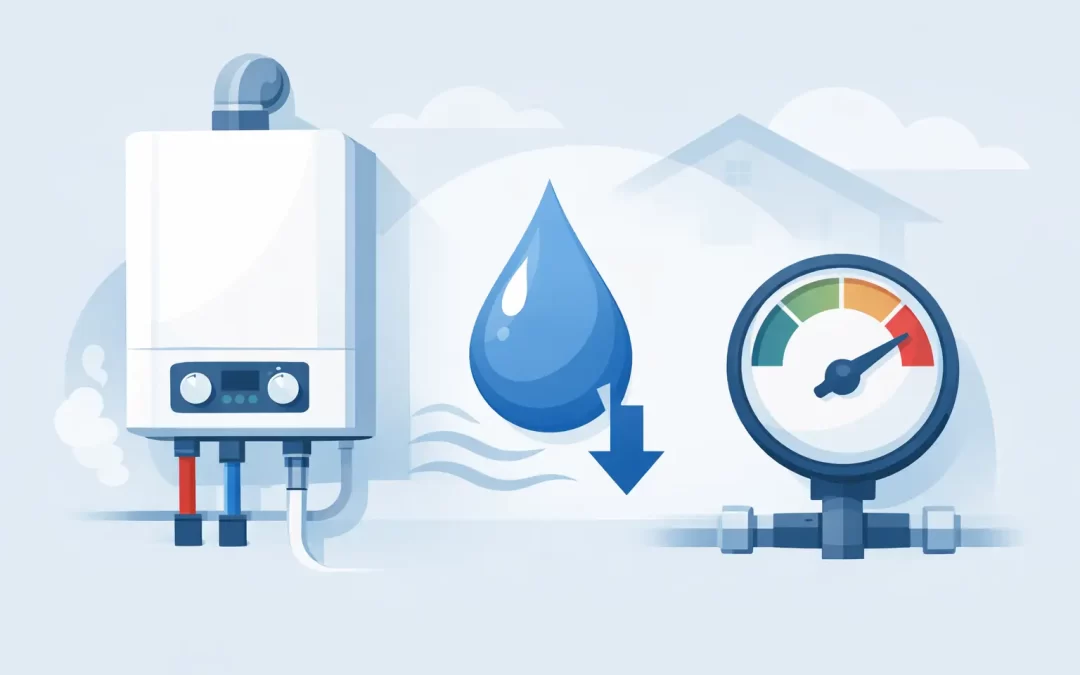
You top up the boiler pressure, it looks fine for a while, then a day or two later the gauge has dropped again. If you are asking why is boiler pressure dropping, the short answer is that water is leaving the heating system somewhere, or the system is not managing pressure changes properly as it heats and cools.
A small movement on the gauge is normal. A repeated drop that takes the pressure too low is not. Left alone, it can lead to poor heating performance, fault codes, boiler lockouts and, in some cases, damage to components that are already under strain.
Why is boiler pressure dropping in the first place?
Most sealed central heating systems rely on a stable amount of water circulating under pressure. When that pressure keeps falling, there is usually an underlying fault rather than a one-off issue. The cause may be simple, such as a radiator valve weeping slightly, or more involved, such as an expansion vessel fault inside the boiler.
The tricky part is that pressure loss is not always dramatic. You may not see water pouring onto the floor. In many homes, the leak is so slight that it evaporates on hot pipework, escapes under floorboards, or only shows when the system is cooling down.
That is why the pattern matters. If you top up once after bleeding radiators and the pressure stays stable, that is often nothing to worry about. If you are repressurising regularly, the system needs attention.
The most common causes of dropping boiler pressure
A leak somewhere on the heating system
This is the most common reason. Even a very small leak can steadily reduce pressure over time. It might come from a radiator valve, a pipe joint, a towel rail, an automatic air vent, or corrosion on older pipework.
In some properties, the signs are obvious – damp patches, staining on ceilings, marked skirting boards or water under a radiator. In others, especially where pipework runs below floors, you may only notice that the pressure keeps falling and one part of the house feels cooler than usual.
Leaks can also worsen when the heating is on and the system is hot, then become almost impossible to spot once everything cools down.
Recently bled radiators
If you have let air out of radiators, the pressure often drops afterwards because the system has lost a little volume. That is expected. Topping it back up once may solve the problem.
What should not happen is repeated pressure loss days later. If that happens, air may still be entering the system through a leak, or there may be another issue causing poor circulation and air build-up.
A faulty expansion vessel
The expansion vessel helps absorb the natural increase in water volume as the system heats up. When it fails or loses its air charge, the pressure can swing too much between hot and cold.
A common sign is this: the pressure looks high when the heating is on, then drops sharply once the system cools. You might also notice water discharging outside through the pressure relief pipe. This is not usually a DIY fix and should be checked by a qualified engineer.
Pressure relief valve passing water
The pressure relief valve is a safety device that opens if system pressure becomes too high. Sometimes it lifts when there is another fault, then does not reseal properly afterwards. When that happens, small amounts of water can continue to escape through the discharge pipe outside.
Because that water is often sent outdoors, many householders never realise it is happening. If the pressure keeps falling and there is no visible indoor leak, this is one of the first things an engineer will consider.
A problem with the filling loop
The filling loop is used to add water back into the system. If it has been left open slightly, or is not shutting off properly, it can affect pressure behaviour. In some cases it may contribute to overpressurisation when the boiler is running, which then leads to water escaping elsewhere.
This is less common than a leak or expansion vessel problem, but it is still worth checking if the pressure seems inconsistent rather than simply low.
Internal boiler component faults
Some pressure loss issues come from inside the boiler itself. A worn seal, heat exchanger problem, automatic air vent fault or internal leak may allow water to escape without it being obvious from the outside.
These faults need professional diagnosis. Opening up a boiler is not a homeowner job, and anything involving gas appliances should be dealt with by a Gas Safe registered engineer.
What pressure should a boiler be at?
For many domestic systems, the cold pressure will sit somewhere around 1 to 1.5 bar. Exact figures vary by model, so it is always best to check the boiler manual if you still have it.
If the pressure drops much below 1 bar, some boilers begin to struggle or lock out. If it rises too high, especially above 2.5 to 3 bar when hot, that points to a different problem and should not be ignored either.
The key thing is stability. A boiler does not need the gauge frozen in one place, but it should not be falling regularly.
What you can check safely at home
Before calling an engineer, there are a few sensible checks you can make without taking anything apart.
Start with the obvious places. Look around radiators, valves and visible pipework for moisture, green staining, rust marks or dried residue. Check under the boiler as well. A few drops can tell you a lot.
Then have a look outside near the pressure relief pipe, if you know where it terminates. If that pipe is dripping or has obvious signs of recent discharge, it may explain the pressure loss.
It is also worth noting when the pressure drops. If it falls only after you bleed radiators, that suggests one issue. If it drops every time the heating cools down, that suggests another. If it crashes quickly after repressurising, the fault is usually more active.
If your boiler pressure is low and the manufacturer instructions allow it, you may be able to top it up using the filling loop. Do this carefully and only to the recommended pressure. Overfilling can make matters worse.
When dropping pressure becomes a repair job
If you have topped up the pressure more than once in a short period, it is time to stop treating it as routine. Repeated repressurising masks the fault rather than solving it.
There is also a practical risk. Fresh water introduced into the system brings oxygen, and that can increase internal corrosion over time. So while topping up is useful as a temporary measure, doing it again and again is not good for the heating system.
A repair is usually needed when the pressure keeps falling, there are visible signs of leaks, the boiler is locking out, or the pressure rises sharply when hot and drops when cold. Those symptoms point to a fault that needs proper diagnosis rather than guesswork.
Why professional diagnosis matters
Pressure loss sounds simple, but the cause is not always where the symptom appears. A customer may assume the boiler is at fault when the real issue is hidden pipework. In other cases, the leak is inside the boiler and there are no visible clues around the home.
A qualified engineer will usually check the system as a whole – boiler components, discharge pipe, expansion vessel, radiator circuit and visible joints – rather than replacing parts blindly. That matters because the cheapest-looking fix is not always the right one.
For landlords and anyone managing an older property, speed matters too. A small unresolved leak can become water damage, mould or a no-heating callout at exactly the wrong time.
Can a boiler lose pressure without a leak?
Sometimes people ask this because they cannot find any water. In practice, the answer is usually that there is still water escaping somewhere, or the system is releasing it during operation. It just may not be easy to see.
The closest exception is when air has been removed from radiators recently, because that changes system pressure without pointing to a fresh fault. But if the pressure continues to drop after that, a leak, vessel problem or relief valve issue becomes much more likely.
So yes, it can seem like pressure is dropping for no reason, but there is almost always a reason. The challenge is locating it properly.
When to call for help
If your boiler pressure drops once and then stays stable after repressurising, keep an eye on it. If it drops repeatedly, if you spot leaks, or if the boiler is showing fault codes or cutting out, book a professional inspection.
For homeowners, that means getting the issue sorted before it becomes a breakdown. For landlords, it means protecting both the heating system and the property. A dependable heating engineer can usually identify whether the problem is a simple external leak, a failed vessel, a passing relief valve or an internal boiler fault.
At CKT Boilers, this is the kind of issue we see regularly across domestic heating systems old and new. The right repair starts with the right diagnosis, and that is what restores reliable heating and hot water without unnecessary disruption.
If your pressure gauge keeps heading the wrong way, trust the pattern. Boilers rarely fix themselves, and a small pressure problem is often easiest to deal with before it turns into a cold-house problem.