
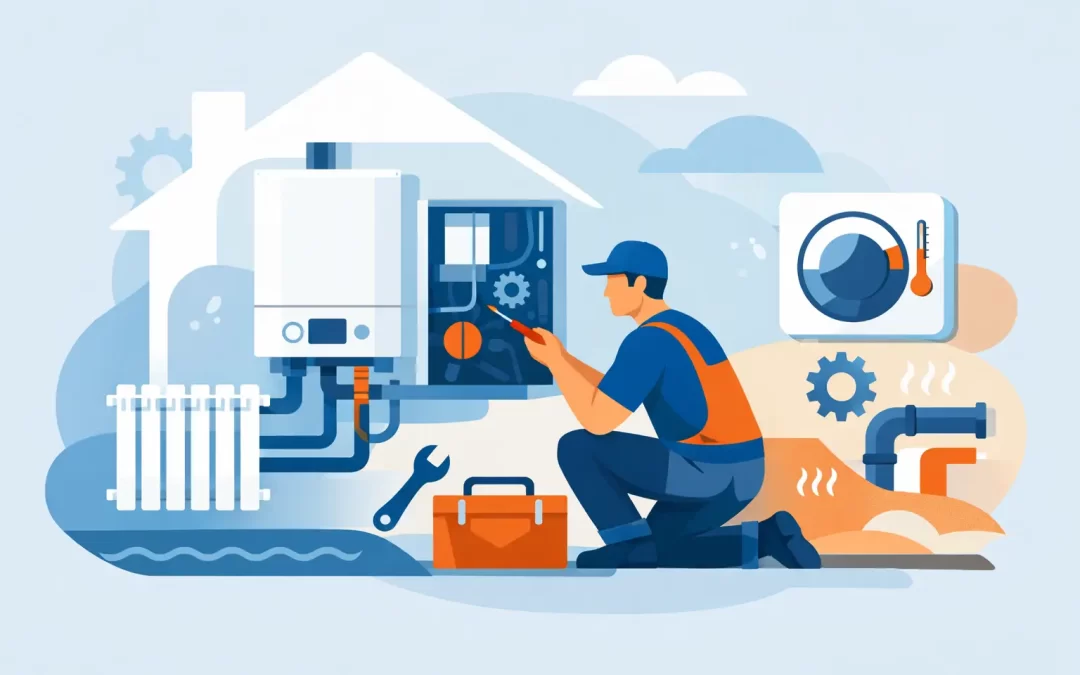
A cold radiator on a winter morning rarely stays a small annoyance for long. One room feels chilly, then the hot water starts taking longer, then the boiler begins making noises it never made before. That is usually the point when central heating repairs move from something to put off until next week to something that needs proper attention now.
For homeowners and landlords, the challenge is not only getting the heat back on. It is knowing whether the fault is minor, whether it points to a bigger system issue, and whether a repair is likely to be the sensible option. A good heating engineer should make that clear quickly, without burying you in jargon.
When central heating repairs are usually needed
Most heating systems give a few warning signs before they stop working altogether. The problem is that those signs are easy to ignore when the system still works some of the time. If radiators are heating unevenly, the boiler pressure keeps dropping, or the heating takes far longer than usual to warm the house, there is often an underlying fault that will not fix itself.
In some homes, the issue sits within the boiler. In others, the boiler is doing its job but the wider system is not circulating heat properly. That distinction matters because a repair could be as simple as replacing a faulty valve, or it could involve addressing sludge in the pipework, trapped air, pump failure or controls that are no longer communicating properly.
This is why central heating faults need a proper diagnosis rather than guesswork. Replacing the wrong part wastes time and money, and it can leave the original issue to cause further damage.
Common faults behind heating system problems
Some heating faults are more common than others, especially in older properties across London and the South East where systems may have been extended, altered or patched over the years.
Cold radiators and uneven heating
If the top of a radiator is cold and the bottom is warm, trapped air is often part of the problem. If the bottom stays cold while the top heats up, sludge and debris in the system may be restricting flow. One affected radiator can point to a local issue such as a stuck valve. Several affected radiators usually suggest a wider circulation problem.
This is one of the most common reasons people call for help, because the boiler may appear to be running normally while the house still does not feel comfortable.
Low boiler pressure
Pressure loss is often a symptom rather than the main fault. A small leak somewhere on the system, a worn pressure relief valve, or issues within the expansion vessel can all be responsible. Topping up the pressure now and then is one thing. Having to do it regularly is a sign the system needs checking.
Leaving it too long can increase the risk of breakdown, especially in colder weather when the system is working harder.
No heating or no hot water
When both heating and hot water fail, the boiler itself is often the place to start. It may be an ignition issue, a faulty pump, a failed component or an electrical control fault. If heating works but hot water does not, or the other way round, the cause may be more specific to the boiler type and controls.
The key point is that a total loss of service does not always mean the boiler needs replacing. Sometimes it does, especially with ageing appliances and repeated breakdowns, but many faults are still repairable if caught in time.
Strange noises from the boiler or pipework
Banging, gurgling, whistling or vibrating sounds should not be ignored. They can indicate air in the system, poor water flow, limescale build-up, pump issues or overheating inside the heat exchanger. Some noises are relatively straightforward to resolve. Others point to wear that has been building for some time.
A noisy system is not only frustrating. It often means efficiency has already dropped.
What a good repair visit should involve
A proper repair appointment should begin with diagnosis, not assumptions. That means checking the boiler, controls, pressure, circulation and visible parts of the heating system to pinpoint the fault before any work starts.
For customers, this matters because heating problems are often connected. A failed component may be the immediate reason the system stopped working, but there may also be a separate issue that caused that component to fail in the first place. If that is missed, the same problem can come back.
A qualified engineer should explain what has failed, whether the repair is safe and worthwhile, and if there are signs of wider wear within the system. That is especially important for landlords, who need dependable repairs and a clear record of what was found.
At CKT Boilers, the approach is centred on practical advice and getting homes warm again with as little disruption as possible. In a high-stress breakdown, clear communication goes a long way.
Repair or replace? It depends on the system
This is usually the question people want answered straight away, and fairly so. But there is no honest one-size-fits-all reply.
If a boiler is relatively modern, has been serviced properly and the fault is isolated, repair is often the right call. It can restore full performance quickly and cost far less than a replacement. The same applies to controls, pumps, motorised valves and many radiator-related issues.
If the boiler is older, parts are becoming difficult to source, and breakdowns are becoming more frequent, repair can start to look like short-term spending without long-term value. Add poor efficiency and rising gas bills, and replacement may become the more sensible investment.
The same thinking applies to the wider heating system. If sludge, poor circulation and repeated cold spots are affecting performance throughout the property, a repair on one part may not deliver the result you want on its own. In those cases, a broader fix such as system cleaning, powerflushing or selected component upgrades may be needed.
Why fast attention usually saves money
People often wait to call because the system is still partly working. That is understandable, but heating faults tend to spread. A small leak can damage internal parts. Sludge can force the pump to work harder. Poor circulation can reduce efficiency and place extra strain on the boiler.
By the time the heating stops altogether, the final repair bill may be higher than it would have been a few weeks earlier. There is also the inconvenience factor. A complete breakdown in cold weather is far more disruptive than dealing with a fault while the system is still running.
For landlords, delay can also mean unhappy tenants and avoidable urgency. For homeowners, it often means paying more attention to the problem at the worst possible moment.
Choosing the right engineer for central heating repairs
Heating work is not an area where cutting corners makes sense. You want an engineer who is properly qualified, experienced with domestic heating systems and able to assess the wider setup, not just the boiler in isolation.
That matters because many faults overlap with plumbing, controls and system design. An engineer with a broader understanding can usually identify whether the issue sits with the appliance, the pipework, the radiators or the controls. It leads to better repairs and fewer repeat visits.
For any gas-related heating work, Gas Safe registration is essential. Beyond that, look for a company that communicates clearly, turns up when promised and treats your home with care. Technical ability matters, but so does reliability when you are dealing with no heating or hot water.
Simple checks before you call
Not every heating issue needs an emergency visit, although many do need professional attention. Before booking central heating repairs, it is worth checking whether the thermostat is set correctly, whether the programmer is calling for heat, and whether boiler pressure has fallen below the recommended range. If only one radiator is affected, the valve setting may also be worth checking.
That said, anything involving repeated pressure loss, leaks, unusual noises, fault codes or a complete loss of heating should be looked at properly. Gas appliances should never be opened or tampered with by anyone unqualified to work on them.
A warmer home starts with the right fix
A heating system does not need to fail completely to tell you something is wrong. Slow warm-up times, cold radiators, pressure problems and boiler noises are often early signs that a repair is needed. Acting early gives you more options, helps avoid bigger faults and makes it more likely that the fix will be straightforward.
If your home is not heating as it should, the best next step is a clear diagnosis from a qualified engineer who can tell you what is happening, what needs doing and what is worth spending money on. A reliable repair is not only about restoring heat today. It is about making sure your system is safe, efficient and ready for the colder weeks ahead.