
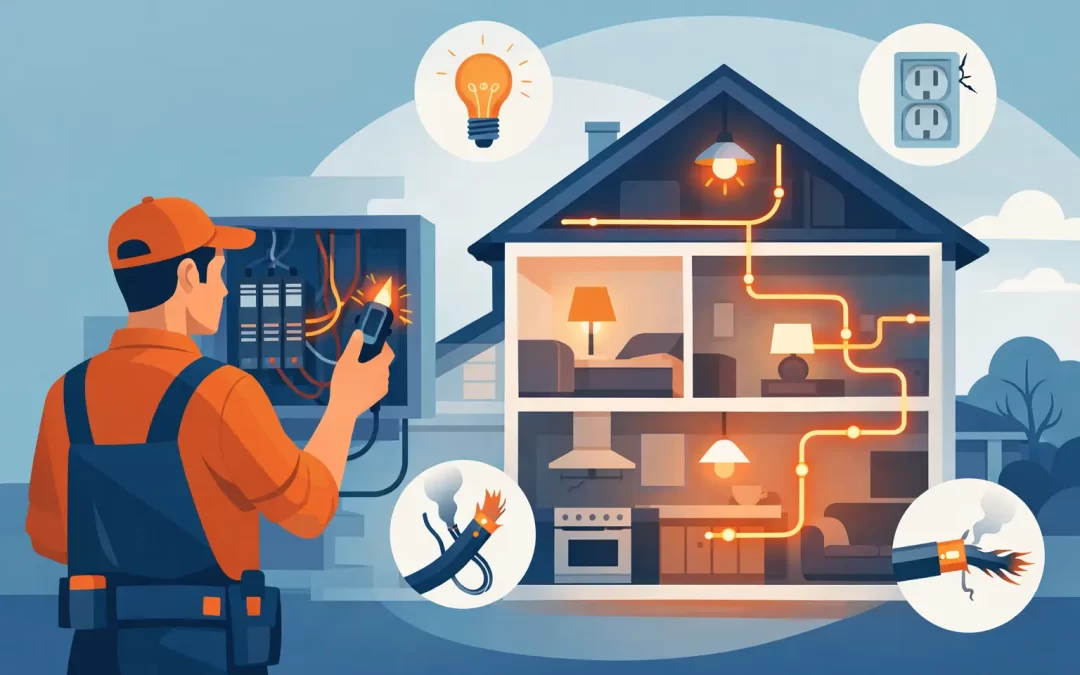
A light switch that crackles, a socket that feels warm, or a fuse that keeps tripping is not a household nuisance to put off until next month. Electrical faults can develop out of sight behind walls, beneath floors and in loft spaces. If you are wondering how to know rewiring is needed in your home, the answer usually starts with a combination of warning signs, the age of the installation and a professional inspection.
Rewiring is a significant piece of work, so it should never be recommended simply because a property is old. Equally, an installation that appears to work can still be unsuitable for modern demand or contain hidden safety issues. The right approach is to look at the evidence, understand the risks and have the condition of the system assessed by a qualified electrician.
How to Know Rewiring Is Needed: Key Warning Signs
Some electrical problems need attention straight away, whether they lead to a full rewire or a more focused repair. Repeatedly tripping circuit breakers or fuses are among the clearest signs. A circuit may trip because of one faulty appliance, but regular trips – particularly when you use ordinary appliances such as a kettle, shower or washing machine – can point to an overloaded circuit, damaged cable or fault within the installation.
Look closely at sockets, switches and light fittings too. Discolouration, scorch marks, buzzing, crackling, a burning smell or warmth around a fitting should never be ignored. Turn off the relevant circuit if it is safe to do so, avoid using the affected point and arrange an urgent electrical inspection. Do not attempt to remove a socket faceplate or investigate wiring yourself.
Other signs can be less dramatic. Lights that flicker or dim when another appliance starts, switches that work intermittently, loose sockets, exposed cable, and electric shocks or tingling from taps or appliances all need professional attention. A shock is particularly serious: stop using the item or circuit and seek advice from a qualified electrician without delay.
Older properties may also have too few sockets for the way a household now lives. Extension leads and multi-way adaptors can be useful temporarily, but a home that relies on them in every room may have an electrical system that no longer matches its day-to-day use. A rewire can provide properly planned circuits and socket locations, rather than adding more strain to an ageing installation.
The Age of Your Wiring Matters, But Is Not the Whole Story
Electrical installations do not come with a fixed expiry date. Their condition depends on the quality of the original work, past alterations, wear and tear, the environment and how heavily they have been used. A well-maintained installation may remain safe for many years, while poorly installed or damaged wiring can need attention much sooner.
That said, homes with wiring more than 25 to 30 years old are sensible candidates for an electrical condition assessment, especially if no recent paperwork is available. Older installations may have dated consumer units, limited circuit protection, insufficient sockets or wiring types that are no longer appropriate. Signs of very old equipment can include a fuse box with rewireable fuses, wooden-backed fittings, round pin sockets, or cables with ageing rubber or fabric insulation.
A modern consumer unit with RCD or RCBO protection is a valuable safety improvement, but replacing the consumer unit alone does not prove that the wiring throughout the property is in good condition. The circuits, connections and earthing arrangements must be suitable for the new protection. This is why a proper assessment matters before deciding on the scope of work.
When a Full Rewire May Be the Better Option
A full rewire is more likely to be recommended where there are widespread defects, deteriorating cable insulation, unsafe connections, inadequate earthing or extensive alterations carried out over many years. It may also make sense when a major renovation is already planned. If floors are being lifted, walls opened, a kitchen replaced or an extension built, installing new wiring at that stage can avoid duplicated disruption and patching later.
It can also be the practical choice if a property needs substantial extra capacity. Modern homes often require dedicated circuits for electric showers, induction hobs, ovens, garden offices, electric vehicle chargers and higher electrical demand in kitchens. Simply adding circuits to an old system is not always the safest or most economical route.
However, not every issue means a full rewire is needed. A single damaged cable, failed socket, faulty light fitting or unsuitable consumer unit may be resolved with targeted work. A reputable electrician should explain what has been found, why it matters and whether repairs, partial rewiring or a complete rewire are the proportionate solution.
Problems That Need Urgent Electrical Attention
Call a qualified electrician promptly if you notice any of the following:
- Burning smells, smoke, sparks or scorch marks from electrical fittings.
- A socket, switch, plug or consumer unit that is hot to the touch.
- Repeated circuit tripping that cannot be linked to one appliance.
- Exposed, damaged or chewed cables.
- Shocks, tingling, buzzing or crackling from electrical equipment or fittings.
- Water damage near sockets, switches, wiring or the consumer unit.
If there is an immediate danger, such as smoke, fire or a person receiving an electric shock, contact the emergency services. Do not touch equipment that may be live, particularly if water is present.
What an Electrical Inspection Can Tell You
The most reliable way to establish whether rewiring is needed is through an Electrical Installation Condition Report, commonly called an EICR. During the inspection, an electrician examines accessible parts of the installation and carries out tests on circuits. This can identify issues with earthing, protective devices, insulation resistance, polarity, connections and circuit condition that are not visible from the outside.
The report records observations using codes that indicate their seriousness. A dangerous issue requiring immediate action is treated very differently from an improvement recommendation. This distinction is useful because it prevents homeowners from assuming that every observation means a complete replacement is required.
An EICR does have limits. Wiring concealed behind finishes cannot always be viewed in full without opening up parts of the building, and an inspection is a snapshot of the installation at that time. Even so, it gives you a sound basis for deciding what work is necessary and prioritising safety-critical repairs.
Planning a Rewire With Less Disruption
Rewiring is disruptive because cables often need to be routed through walls, ceilings and floors. Chasing walls, lifting floorboards and making good afterwards may all be part of the job. In an occupied home, the work is often completed in stages, but there may be periods without power in certain areas and some rooms may need to be cleared.
Before work begins, agree the layout carefully. Think about where you charge mobile phones, place lamps, use televisions, work from home and position kitchen appliances. Consider outdoor power, extractor fans, bathroom lighting, security systems, smoke alarms and future additions such as solar panels or an electric vehicle charger. Good planning helps avoid the frustration of installing a beautiful new room with sockets in the wrong place.
Ask for a clear written scope that explains what is included, how circuits will be protected, what making-good work is or is not covered, and what certification will be issued on completion. Electrical work should be tested thoroughly, with the appropriate paperwork provided once the installation is complete.
Extra Considerations for Landlords and Buyers
Landlords in England have legal duties to ensure that electrical installations in rented homes are inspected and tested at least every five years by a qualified person, with reports provided as required. An unsatisfactory report does not automatically mean a full rewire, but remedial work must be addressed within the required timescale.
For buyers, an older property with limited electrical information deserves more than a quick look at the consumer unit during a viewing. An EICR before exchange, or as soon as possible after purchase, can reveal whether you are budgeting for a few upgrades or a more substantial electrical project. It is particularly worthwhile when planning a loft conversion, kitchen renovation or other major refurbishment.
Your electrical system should support everyday life quietly and safely, not demand attention through trips, flickering lights or worrying smells. If something does not feel right, arranging a professional assessment early can protect your property, reduce avoidable disruption and give you a clear plan for the work that is genuinely needed.