
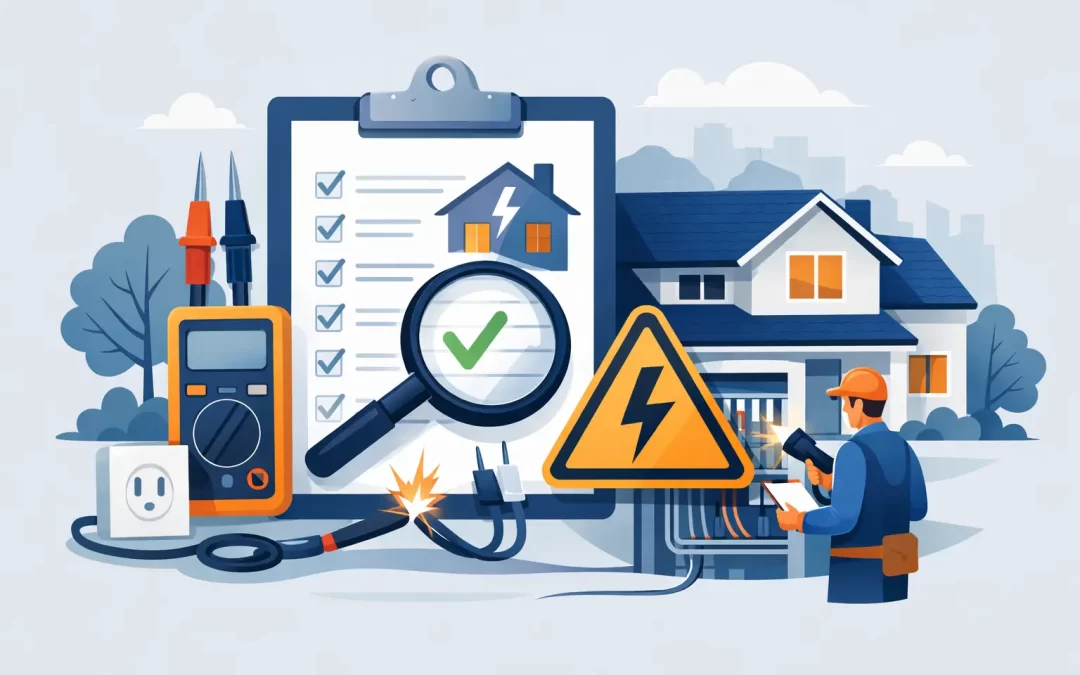
A socket that feels warm, lights that flicker when the kettle is on, or a fuse board that trips without an obvious reason are not problems to put off until a convenient time. An electrical safety report for home gives you a clear picture of the condition of your fixed wiring, so faults can be found before they cause disruption, electric shock or fire risk.
For homeowners, it is a practical way to plan repairs and protect an older property. For landlords in England, it is also a legal responsibility. The report is not simply a pass-or-fail certificate: it is a professional inspection of the parts of the electrical installation that cannot be properly assessed from a quick visual check.
What is an electrical safety report for home?
An electrical safety report is commonly known as an Electrical Installation Condition Report, or EICR. A qualified electrician inspects and tests the fixed electrical installation, including the consumer unit, circuits, wiring, sockets, switches, light fittings and earthing arrangements.
It does not normally cover the condition of plug-in appliances such as kettles, televisions or washing machines. Those may need separate appliance checks, particularly in a rented property. It also does not mean that every cable hidden in a wall is uncovered. Instead, the electrician uses testing, visual inspection and professional judgement to assess whether the installation is safe for continued use.
At the end of the visit, you receive a written report setting out the findings, the overall outcome and any recommended action. This gives you useful evidence of the installation’s condition, rather than relying on guesswork or assuming that a working socket is necessarily a safe one.
When should you arrange an electrical safety report for home?
The right timing depends on the property, its age, how it is used and whether there are signs of trouble. As a general guide, owner-occupied homes are often recommended to have an EICR at least every ten years. If you rent out a property in England, the electrical installation must be inspected and tested at least every five years, or sooner if the report requires it.
There are other occasions when arranging an inspection makes good sense. Buying an older house or flat is a common example. A survey may identify an old fuse board, dated wiring or signs of DIY alterations, but it is not a substitute for electrical testing. An EICR can help you understand the condition of the installation before committing to major renovation work.
You should also consider a report after water damage, flooding, a serious electrical fault or a period when a property has been empty. Water and electrics are a particularly concerning combination, even after everything appears dry. Similarly, if you are planning a new kitchen, extension, loft conversion, electric shower, EV charger or other high-demand addition, checking the existing installation first can prevent costly surprises later.
Do not wait for a routine inspection if you notice burning smells, discolouration around accessories, recurring tripping, buzzing, shocks or loose sockets. Switch off the affected circuit if it is safe to do so and arrange professional help promptly. An EICR identifies wider issues, but an urgent fault may need immediate diagnosis and repair.
What happens during an EICR?
A proper inspection needs access to the consumer unit and a representative range of electrical points around the property. The electrician will look for damage, unsuitable alterations, inadequate earthing, overloaded circuits, missing protection and signs of overheating. They will then carry out electrical tests to check that circuits disconnect correctly in the event of a fault and that protective devices are operating as intended.
Some interruption to the electrical supply is usually necessary. This can be inconvenient if you work from home, have a freezer full of food or rely on powered equipment, but it allows the installation to be tested safely and accurately. A good electrician will explain the likely disruption before work begins and take care around your home.
The time required varies. A small modern flat with a straightforward installation may take considerably less time than a large family house with an older consumer unit, multiple extensions or previous alterations. The number of circuits and the accessibility of the installation matter more than the number of rooms alone.
Understanding the observations on your report
An EICR uses codes to show how urgently issues need attention. The wording can look technical, but the practical meaning is straightforward.
A C1 observation means danger is present and immediate action is needed. A C2 means the issue is potentially dangerous and should be repaired urgently. FI means further investigation is required because the electrician could not confirm whether a concern is safe without more work. Any of these findings will normally result in an unsatisfactory report.
A C3 observation is an improvement recommendation. It does not necessarily mean the installation is unsafe, but it highlights an item that would benefit from being brought up to a better current standard. For example, an older installation may be safe enough to remain in service but lack the additional protection expected in a modern home.
This distinction matters. An unsatisfactory report is not a reason to panic, nor does it automatically mean a full rewire is required. The right solution could be a targeted repair, an upgraded consumer unit, improved earthing or further investigation into a particular circuit. Equally, simply replacing a fuse board will not correct poor wiring or hidden faults elsewhere in the property. The report should help you make a proportionate decision based on the actual findings.
Common issues found in older homes
Many properties across London and the South East have been extended, converted or altered over several decades. That can leave a mixture of old and new electrical work behind walls and under floors. Common findings include damaged or ageing accessories, inadequate earthing, circuits without modern RCD protection, overloaded additions and connections that have not been installed correctly.
Older consumer units are not automatically unsafe. However, their protective devices may not offer the level of protection provided by a modern installation. The electrician will assess the whole system, not just its age or appearance.
DIY work can also cause concerns. Adding a socket, changing lighting or fitting a new extractor fan may look simple, but wiring errors are not always visible. If a property has undergone several cosmetic refurbishments, an inspection can provide reassurance that the electrical work behind the finished surfaces has been checked properly.
Landlord responsibilities in England
Private landlords must ensure that electrical safety standards are met and that every fixed electrical installation is inspected and tested by a qualified person at least every five years. A copy of the report must be supplied to existing tenants within 28 days of the inspection, to new tenants before they move in and to the local authority within seven days if requested.
Where the report identifies remedial work or further investigation, it must generally be completed within 28 days, or within the shorter timescale stated on the report. Landlords should then obtain written confirmation that the work has been completed and provide this to tenants and the local authority where required.
Keeping clear records is sensible even when the property is between tenancies. It helps demonstrate that safety has been managed properly and means repairs can be organised before a small issue becomes an emergency call-out.
Choosing the right electrician and preparing for the visit
An electrical report is only as useful as the inspection behind it. Choose a suitably qualified, competent electrician who carries out inspection and testing work regularly. Be wary of unusually low quotes that do not explain what is included, particularly for larger or older properties where a thorough report takes time.
Before the appointment, make the consumer unit accessible and let the electrician know about known faults, recent leaks, extensions, solar panels, electric heating or any work that may affect the installation. If access to certain rooms, outbuildings or electrical equipment is restricted, mention this in advance. The report may need to record limitations where full inspection has not been possible.
If repairs are recommended, ask for the findings to be explained in plain English and request a clear scope of work. At CKT Boilers, electrical fault diagnosis, reports and remedial work can be arranged alongside wider home services, which can be helpful when electrical issues affect heating controls, bathrooms or planned improvements.
A safe electrical installation rarely demands attention until something goes wrong. Arranging an inspection before that point gives you time to deal with genuine risks calmly, budget for sensible improvements and keep your home or rental property safe for the people who use it.