
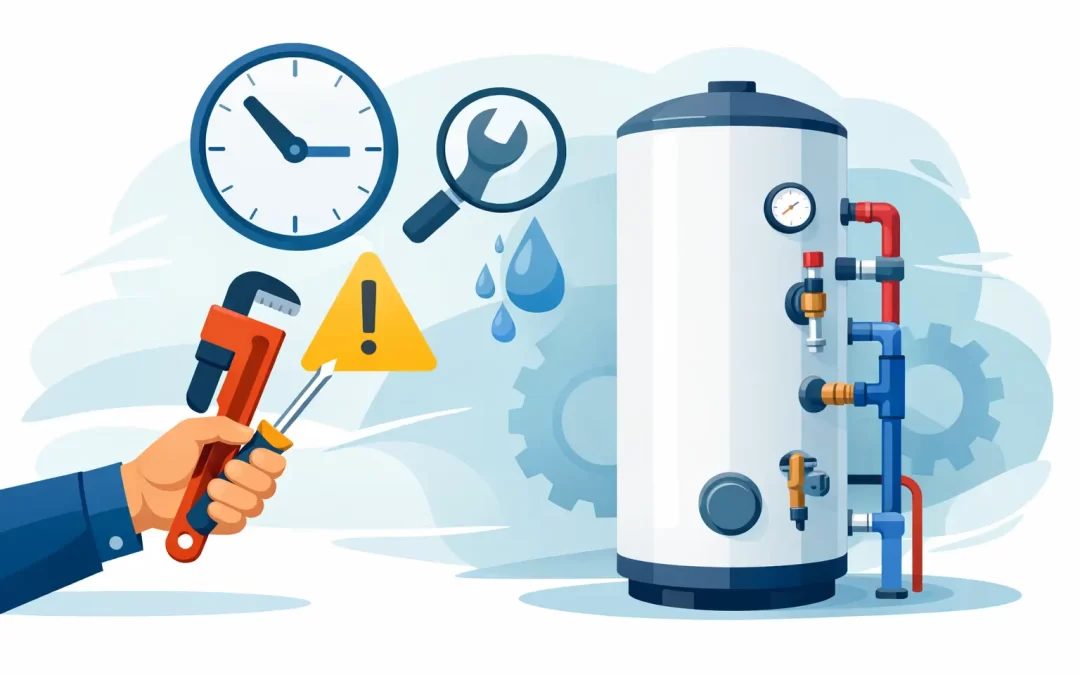
A powerful shower that suddenly runs lukewarm, a discharge pipe dripping outside, or a warning light on the cylinder controls can quickly turn a normal morning into a problem. An unvented cylinder service is designed to prevent those issues by checking the safety devices and controls that allow your system to store hot water at mains pressure safely.
For households across London and the South East, an unvented cylinder can be an excellent way to supply strong, reliable hot water to several taps and showers at once. It does, however, need the right level of care. Unlike a basic vented hot water cylinder, an unvented system operates under pressure and has specific safety components that must be inspected by a suitably qualified engineer.
What is an unvented hot water cylinder?
An unvented cylinder stores hot water supplied directly from the mains. Because it does not rely on a cold-water tank in the loft, it can provide higher pressure at outlets, subject to the incoming mains supply and the size of the system. This makes it a popular choice for larger homes, properties with more than one bathroom, and households that want a better shower performance.
The cylinder may be heated indirectly by a boiler through an internal coil, or directly by electric immersion heaters. Some systems work alongside solar thermal equipment or a heat pump. The heat source may differ, but the safety controls around the stored hot water remain essential.
Unvented cylinders include devices such as an expansion vessel or internal air gap, pressure-reducing valve, temperature and pressure relief valve, expansion relief valve, tundish and discharge pipework. These parts are not optional extras. They control pressure, accommodate water expansion and provide a safe route for discharge if a fault develops.
Why an unvented cylinder service matters
Hot water expands as it heats. In a sealed, pressurised cylinder, that expansion has to be managed correctly. If a valve sticks, an expansion vessel loses its charge, or a control fails to operate, the system may not work as intended.
A regular service helps identify wear before it causes a loss of hot water, unnecessary water discharge or damage to components. It also gives you the reassurance that important safety mechanisms have been assessed by someone who understands how they work together.
Servicing can improve day-to-day reliability too. Small signs such as inconsistent water temperature, reduced pressure, unusual noises or occasional dripping are often easier and less disruptive to resolve early. Leaving them can lead to a more urgent repair, particularly when the household is relying on the cylinder for every shower, bath and kitchen tap.
For landlords, planned servicing is a sensible part of looking after a rental property. It helps reduce avoidable call-outs and supports a safer, more dependable hot water supply for tenants. The exact responsibilities can vary with the installation and tenancy arrangements, so it is worth keeping clear service records for the property.
What happens during an unvented cylinder service?
The exact work depends on the cylinder make, model, age and installation, as manufacturers set their own servicing requirements. A qualified engineer will begin by checking the overall condition of the cylinder, controls and visible pipework, then follow the relevant manufacturer guidance.
They will normally inspect the pressure-reducing and expansion controls, along with the temperature and pressure relief arrangements. The tundish and discharge pipework are checked for signs of discharge, corrosion, poor routing or obstruction. A dripping tundish or external pipe should never be ignored or blocked off. It is a warning that needs investigation.
The engineer may test the safety valves in line with the manufacturer’s instructions and check that they reseat correctly afterwards. They will also assess the expansion vessel where fitted, as a loss of air charge can cause repeated discharge from a relief valve.
Controls are another important part of the visit. This can include checking thermostats, motorised valves, programmers, immersion heaters and the boiler connection on an indirect system. If the cylinder is heated by a gas boiler, the boiler should be serviced separately as part of its own maintenance schedule. One visit can sometimes cover both appliances, but they are not the same service.
A good service is not just a series of tests. It should leave you with a clear explanation of the cylinder’s condition, any issues found and the recommended next step. If parts are worn or a repair is needed, the engineer should explain why before work is carried out.
Is a service the same as a repair?
No. Servicing is planned maintenance and safety checking. A repair is work needed because a fault has developed, such as a failed immersion heater, leaking valve, damaged expansion vessel or poor hot water performance.
Sometimes a service uncovers a fault that needs repair. That does not mean the service has failed – it means a problem has been found before it has had the chance to become more disruptive. The cost and scope of repairs will depend on the component, access to the cylinder and whether parts are readily available.
How often should an unvented cylinder be serviced?
Most manufacturers recommend annual servicing, and this is a sensible starting point for most homes. Your cylinder’s installation manual, warranty terms and previous service records may set out a more specific requirement.
Annual attention is particularly worthwhile if the cylinder is approaching the later stages of its expected life, supplies a busy family home, or has had previous issues with discharge pipework or pressure. It is also wise to arrange a check after alterations to the heating or hot water system.
Do not wait for the annual date if you notice a problem. A prompt inspection is advisable if you see water passing through the tundish or discharge pipe, lose hot water repeatedly, experience unusually high pressure, hear banging or whistling around the cylinder, or notice water leaking from the unit or nearby pipework.
Why the right qualification matters
Work on an unvented hot water cylinder should be carried out by a competent person with the appropriate unvented hot water qualification. This is not simply about changing a part. The engineer needs to understand the system’s stored energy, its safety controls, the required discharge arrangements and the manufacturer’s instructions.
If your cylinder is connected to a gas boiler, any gas work must also be undertaken by a Gas Safe registered engineer. Electrical elements and controls require equally careful attention. Choosing a properly qualified multi-trade team can be especially helpful when a fault crosses between the boiler, plumbing controls and electrical supply.
At CKT Boilers, our engineers approach hot water cylinder work with the same care we bring to boiler servicing and repairs: clear advice, tidy workmanship and a focus on restoring safe, dependable comfort at home.
Getting the most from your cylinder between services
There is little routine maintenance that homeowners should carry out themselves on an unvented system. The safest approach is to keep the cylinder cupboard accessible, avoid storing heavy items against valves or pipework, and make a note of any changes in performance.
Do not attempt to alter pressure settings, cap a discharge pipe, force a valve or remove the cylinder casing to investigate a fault. These systems contain very hot water under pressure. A qualified engineer can diagnose the cause without compromising the safety arrangements.
It is also worth checking that everyone in the household knows where to find the cylinder and how to identify the tundish. If water is visibly flowing through it, or the external discharge pipe is releasing water, arrange professional advice rather than assuming it will stop on its own.
Reliable hot water is easy to take for granted until it is gone. Booking a qualified service at the right interval gives your cylinder the attention it needs, while giving you more confidence that the next morning starts with hot water when you need it.