
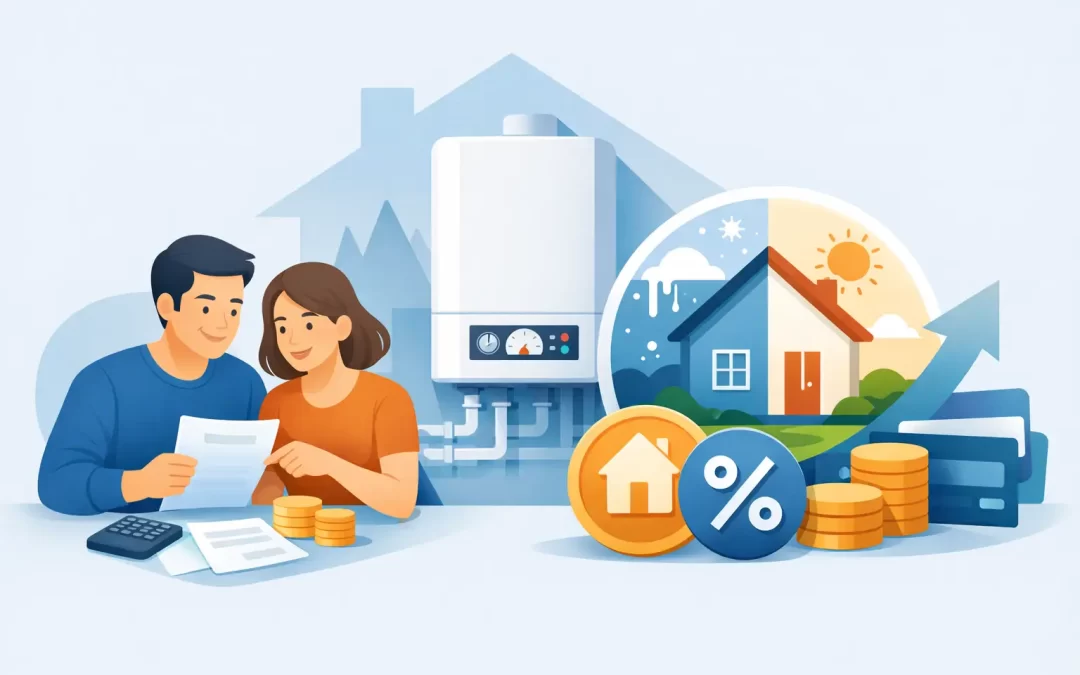
A boiler rarely breaks down at a convenient time. When there is no heating, no hot water or an older system is becoming unreliable, the cost of a replacement can feel difficult to manage in one payment. So, is boiler finance worth it? For many households, it can be a sensible way to replace an inefficient or failing boiler without delaying essential work – provided you understand the total cost and choose the right installation.
Boiler finance is not automatically the cheapest option, and it will not suit every budget. It is a tool for spreading the cost of a new boiler and installation over an agreed period. The value comes from balancing manageable monthly payments against the interest charged, the potential savings from a more efficient system, and the reassurance of reliable heating when you need it.
What boiler finance usually covers
Boiler finance allows eligible customers to pay for a new boiler installation in monthly instalments rather than paying the full amount upfront. The available term, interest rate, deposit requirements and acceptance criteria vary by finance provider and your individual circumstances.
Depending on the package, finance may cover more than the boiler itself. A proper replacement can include the boiler, controls, filter, flue components, pipework alterations, system cleansing and labour. This matters because a low headline price does not always reflect the full work needed for a safe, manufacturer-compliant installation.
Before agreeing to any finance arrangement, ask for a clear written quotation that explains what is included. You should know the cash price, deposit, monthly payment, repayment term, interest or APR where applicable, total amount repayable and any charges that could apply if you miss payments. Take time to read the agreement before signing it.
Is boiler finance worth it when your boiler has failed?
If your boiler has failed completely and a repair is no longer economical, finance can prevent a stressful situation becoming a prolonged disruption. Waiting several months to save the full amount may leave a household relying on electric heaters, dealing with cold rooms or struggling without reliable hot water. For families, older residents, tenants and anyone working from home, that can carry a real day-to-day cost.
A new, correctly sized boiler installed by a qualified Gas Safe engineer can restore dependable heating quickly. Spreading the cost may be worthwhile if the monthly figure fits comfortably within your household budget and allows you to choose a suitable quality installation rather than the lowest possible upfront price.
There is an important distinction, though. Urgency should not stop you from checking the numbers. A breakdown creates pressure, but it should not lead to agreeing to finance you cannot comfortably maintain. If the boiler has been declared unsafe, follow the engineer’s advice and do not use it. Safety always comes before convenience.
The real cost is more than the monthly payment
A monthly payment can look affordable while the overall repayment amount is significantly higher than the cash price. That does not necessarily make finance a bad decision. It simply means you need to compare like for like.
For example, a longer repayment term often lowers the monthly instalment but may increase the total interest paid. A shorter term can cost more each month but reduce the total cost of borrowing. An interest-free offer, where available and subject to terms and eligibility, may be particularly attractive, but you should still check whether a deposit is required and what happens if payments are missed.
It also helps to consider what you are paying for beyond the boiler. An installation carried out to the manufacturer’s requirements can protect the warranty and help the system perform as intended. Correct commissioning, suitable controls and attention to water quality all contribute to efficiency and reliability. Cutting corners to save money at the start can lead to avoidable repair costs later.
When finance can make good sense
Boiler finance is often worth considering when you have a boiler that is old, unreliable or expensive to repair, but you do not want to drain your savings in one go. It can also be useful for landlords needing to maintain a safe, habitable property without creating a sudden cash-flow problem.
Replacing an inefficient boiler may reduce wasted energy, especially where the existing unit is ageing, poorly controlled or breaking down regularly. Savings on gas bills should be treated as a welcome benefit rather than a guaranteed way to fund the repayments. Your actual usage, property insulation, heating habits, boiler size and tariff will all affect the result.
Finance may also be the better route if it means you can address related system issues at the same time. Replacing unsuitable controls, improving circulation, resolving problem radiators or arranging a powerflush where recommended can help a new boiler work properly. A good engineer will explain what is necessary, what is advisable and what can wait.
When paying upfront may be better
If you have savings set aside for home maintenance and paying cash will not leave you financially exposed, an upfront payment will usually cost less overall because there is no interest to pay. It can be the straightforward choice for a planned replacement, particularly if your existing boiler is still working and you have time to budget.
Finance may be less suitable if the repayments would make your monthly finances tight. Boilers are essential, but so are rent or mortgage payments, food, insurance and other household commitments. Missing payments can lead to additional costs and may affect your credit record, so only borrow what you can realistically repay.
It is also worth getting a professional opinion before replacing a boiler purely because of one fault. Some repairs are sensible and can provide several more years of service. Others are a warning that the boiler is reaching the end of its working life. The right decision depends on the fault, age, repair history, efficiency and availability of parts.
Questions to ask before choosing boiler finance
A clear conversation with your installer and the finance provider will make the decision easier. Ask these questions before you proceed:
- What is the full cash price, and what is the total amount I will repay through finance?
- Is a deposit needed, and how long will the repayment term last?
- What interest rate or APR applies, and are there fees for missed or late payments?
- Exactly what work, controls, warranty arrangements and commissioning are included in the installation?
- Is this boiler correctly sized for my home and hot water demand?
The final question is particularly important. Bigger is not automatically better. An oversized boiler can be less efficient in everyday use, while an undersized model may struggle to meet demand. A proper survey should consider the property, existing system, number of bathrooms and how you use hot water.
Do not confuse boiler finance with boiler cover
Boiler finance pays for a new installation over time. Boiler cover is an ongoing service agreement that may contribute towards repairs, call-outs or annual servicing, depending on its terms. They solve different problems.
After investing in a new boiler, arranging an annual service is one of the best ways to support safe operation, maintain many manufacturer warranty conditions and identify small issues early. Keeping the system looked after can reduce the likelihood of facing another unexpected replacement decision sooner than necessary.
Choosing the installer matters as much as the payment plan
The finance agreement is only one part of the purchase. The boiler will be in your home for years, so the quality of the survey, advice and installation matters just as much. Look for a Gas Safe registered engineer, a detailed quotation, clear answers to your questions and an installer who explains the work without pressure or unnecessary jargon.
For homeowners across London and the South East, CKT Boilers can assess the condition of your current system and discuss replacement options in practical terms. The aim should be to fit a boiler that suits your property, budget and heating needs, not simply to sell the quickest option.
If the numbers are clear, the monthly payment is comfortable and the installation is being carried out properly, boiler finance can turn an unwelcome expense into a manageable home improvement. Start with an honest assessment of your boiler and your budget, then choose the option that lets you keep your home warm without creating a bigger worry elsewhere.