
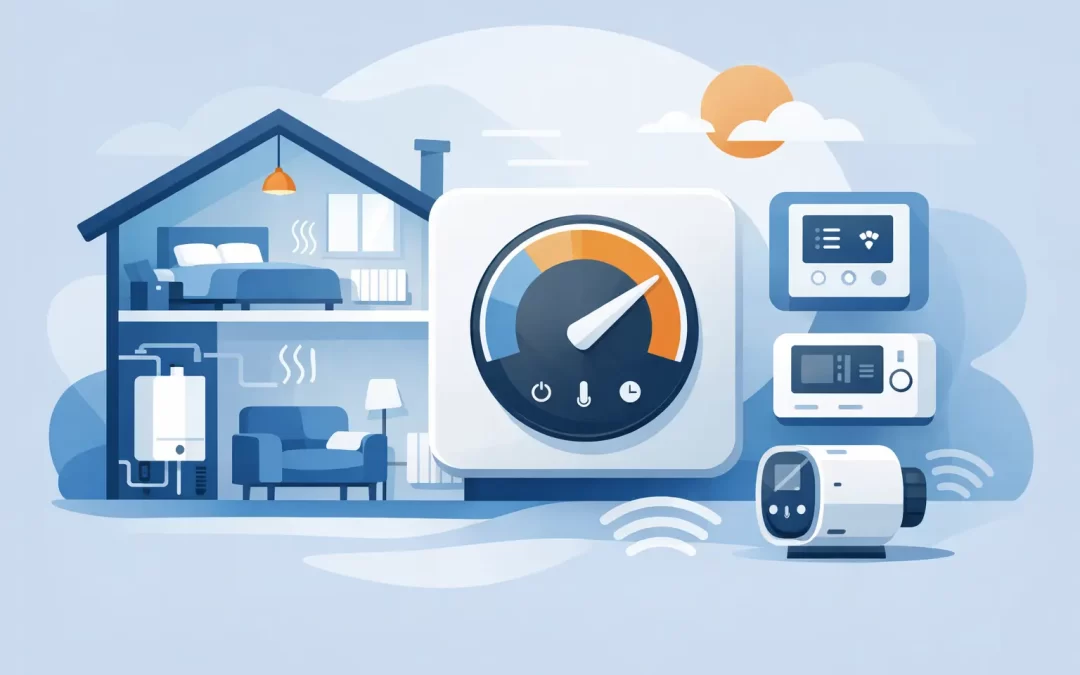
A warm living room should not mean waking up to an overheated bedroom, or returning to a cold house after work because the heating has run at the wrong time. This guide to central heating controls explains how the main controls work together, what to adjust first and when it is worth asking a qualified heating engineer for help.
Your boiler creates heat, but its controls decide when and where that heat is used. Set up properly, they can make your home more comfortable, reduce wasted energy and help your boiler run more efficiently. Set up poorly, even a modern boiler can use more gas than necessary.
The central heating controls that matter most
Most homes have a combination of a room thermostat, a programmer or timer, thermostatic radiator valves and, in some cases, a hot water cylinder control. You do not need every type of control to improve comfort, but understanding the job of each one prevents common problems such as constantly changing the thermostat or turning every radiator valve to maximum.
Room thermostat
The room thermostat monitors the air temperature and tells the boiler when to fire up or switch off. It should usually be set to the temperature you would like the main living area to reach, rather than turned up high in the hope that the house will warm faster. A higher setting does not heat the home more quickly. It simply keeps the boiler running for longer until that temperature is reached.
For many households, around 18°C to 21°C is a comfortable starting point, although the right temperature depends on the property, occupants and daily routine. Young children, older people and anyone with health conditions may need a warmer home. If you are regularly cold at 21°C, check for draughts, poor insulation or uneven radiator performance rather than assuming the thermostat is the only issue.
Position matters. A thermostat placed near a radiator, direct sunlight, a fireplace, kitchen appliances or a draughty external door can take inaccurate readings. It may shut the heating down too soon or keep it on longer than needed.
Programmer or timer
A programmer sets the times when the heating, and often hot water, can operate. Think of it as the schedule, while the thermostat is the temperature limit. If your heating is programmed from 6am to 8am, it is allowed to run during that period, but it will only fire the boiler if the thermostat detects that the house is below the set temperature.
Set the programme around real life. A household that leaves at 8am and returns at 6pm does not normally need full heating all day. Allow enough time before you wake up or arrive home for the property to warm through. Older, solid-wall homes often need a longer warm-up period than well-insulated modern properties.
Avoid setting long heating periods just because the weather is cold. It is usually better to use realistic timed periods and a sensible thermostat temperature. During a holiday or an extended absence in winter, use a low frost-protection setting rather than turning the system off completely if there is a risk of frozen pipes.
Thermostatic radiator valves
Thermostatic radiator valves, often called TRVs, are the numbered controls on individual radiators. They regulate the temperature in each room by reducing the flow of hot water once that room reaches its chosen level. They are useful for keeping bedrooms cooler than living areas, or for avoiding heat in rooms that are rarely used.
The numbers are not precise temperature settings, and they vary between manufacturers. As a guide, a mid-range setting is often suitable for a bedroom, while a higher setting may suit a frequently used living room. If a room is too warm, turn the TRV down a little and allow time for the temperature to settle before adjusting it again.
Do not fit a TRV in the same room as the main thermostat unless the system has been designed for it. If the radiator beside the thermostat turns down too early, the thermostat may think the whole house is warm and stop the boiler before other rooms are comfortable. In many systems, the radiator in the thermostat room is left fully open.
Hot water controls
If you have a hot water cylinder rather than a combi boiler, you may have separate heating and hot water settings. A cylinder thermostat controls the stored water temperature, which is commonly set around 60°C. This is warm enough for household use and helps control the risk of harmful bacteria developing in stored water.
The boiler flow temperature and the cylinder thermostat do different jobs. Do not lower the cylinder thermostat below a safe setting to cut bills without advice. If you are unsure which dial controls what, an engineer can explain your system during a service or heating visit.
How to set your heating controls efficiently
Start by setting a comfortable room temperature and a heating schedule that reflects your usual week. Then use radiator valves to fine-tune individual rooms. This order is important: the main thermostat should control the overall home temperature, while TRVs make smaller room-by-room adjustments.
A simple weekday routine might be heating before the household gets up, switching it off while everyone is out, then warming the home ahead of the evening. At night, most people are comfortable with a cooler bedroom, provided the home remains safely heated in cold weather.
If your routine changes from day to day, a smart thermostat may be useful. Many models allow schedules to be changed from a mobile phone and can learn patterns or use location settings. They are convenient, but not always the best first investment. A correctly positioned standard thermostat, a reliable programmer and working radiator valves can make a significant difference at a lower cost.
Smart controls also need a stable connection and proper installation. They should be compatible with your boiler and heating system, especially where hot water cylinders, multiple heating zones or older wiring are involved.
Zoned heating and larger homes
A heating zone is an area of the property controlled separately from another area. For example, an upstairs thermostat can regulate bedrooms while a downstairs thermostat manages the living areas. Zones are particularly useful in larger homes, extensions, properties with underfloor heating, or households where rooms are used at very different times.
Zoning can reduce waste because you are not heating every part of the property to the same level. However, it requires the right valves, controls and wiring. Simply adding extra thermostats without assessing the system can create unreliable heating or confusing control settings.
Landlords should also consider how straightforward controls are for tenants to use. A complicated control panel can lead to unnecessary call-outs, particularly when occupants cannot tell whether the problem is a timer setting, a low thermostat temperature or a genuine boiler fault.
Common control mistakes that raise bills
The most frequent mistake is treating the thermostat like an accelerator. Turning it from 20°C to 28°C will not make radiators heat up faster. It only risks overheating the home and increasing gas use.
Another is switching the heating on and off manually at random times. This often leads to cold rooms, then an extended period of high heating demand. A clear programme gives the system a more predictable job and reduces the temptation to leave it running all day.
Keep doors and windows closed in heated rooms, and make sure curtains are not covering radiators. A TRV hidden behind furniture or heavy fabric cannot sense room temperature accurately. Likewise, a cold radiator may not be a control issue at all. It could need bleeding, balancing, valve replacement or powerflushing if sludge is affecting circulation.
When to call a heating professional
Controls should make your heating easier to manage, not leave you guessing. Ask for professional support if your boiler ignores the thermostat, the programmer has lost its settings, one part of the home is always cold, radiators heat when they should be off, or you are considering a smart thermostat or zoned system.
A Gas Safe registered engineer can check whether the fault lies with the controls, boiler, pump, valves or system wiring. This matters because replacing a thermostat will not solve a circulation issue, and changing boiler settings without understanding the system can affect comfort and efficiency.
CKT Boilers can assess central heating controls as part of wider boiler, radiator and heating repair work, helping homeowners make practical changes without unnecessary disruption.
A few well-set controls can make a noticeable difference on the next cold morning. Start with a sensible schedule, keep the main thermostat at a comfortable temperature, and adjust one setting at a time so you can see what genuinely improves your home.