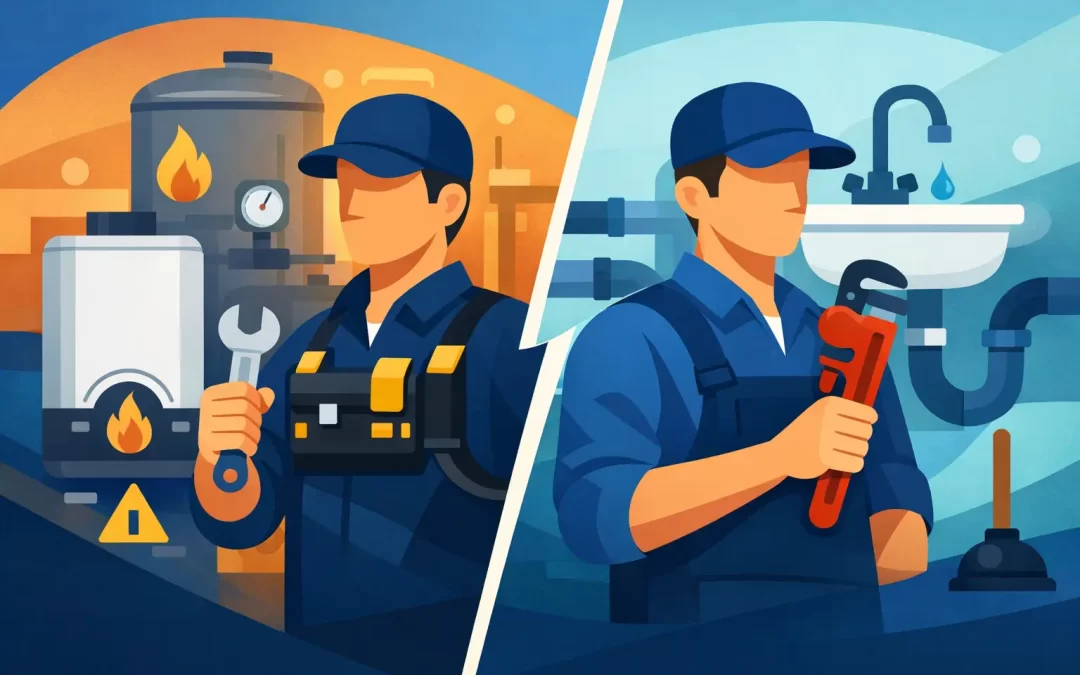
A boiler that has stopped producing hot water at 7am is not the moment to gamble on the wrong trade. The question of gas engineer versus general plumber matters because the work may involve both water and gas, but only the right qualification makes it safe and legal to carry out.
For homeowners, landlords and occupiers, the simplest rule is this: if a job involves a gas appliance, gas pipework or a flue, call a Gas Safe registered engineer. For a water supply, waste pipe, tap, toilet or non-gas plumbing issue, a competent general plumber is often the right person. The detail matters, though, particularly where boilers and central heating are concerned.
Gas engineer versus general plumber: the key difference
A general plumber works on water systems and drainage. That can include repairing leaking pipes, replacing taps, fitting toilets, installing baths and showers, unblocking waste pipes, repairing cold-water tanks and connecting sanitaryware during a bathroom installation. Many plumbers also have considerable experience with radiators, valves and pipework.
A gas engineer is trained and registered to work safely on gas appliances and associated systems. In the UK, anyone carrying out gas work as part of their business must be Gas Safe registered and qualified for the specific type of work involved. Their registration and categories of competence determine whether they can work on domestic boilers, cookers, fires, gas pipework or commercial equipment.
The distinction is not always as neat as the job title suggests. Some plumbers are also fully qualified Gas Safe engineers. Equally, some gas engineers offer wider plumbing and heating services. What matters is not the wording on the van – it is whether the person attending is qualified and registered for the work your property needs.
When you need a Gas Safe registered engineer
If there is any possibility that a fault involves gas combustion, a boiler, a flue or a gas supply, choose a Gas Safe registered engineer from the outset. This protects your household and avoids a repair being delayed by an engineer who cannot legally work on the appliance.
Boiler repairs, servicing and installation
Boilers are the clearest example. A boiler contains water components, pumps, valves and pipework, but it is also a gas appliance. Diagnosing a lockout, replacing a fan, checking combustion, repairing a gas valve or inspecting the flue requires the correct gas qualifications.
The same applies to annual boiler servicing. A proper service checks the appliance is operating safely and efficiently, including its combustion performance where required. It is not simply a visual inspection or a quick pressure top-up.
If you are replacing an older boiler, a qualified gas engineer can assess the appliance size, pipework, controls, condensate route, flue position and ventilation requirements. Manufacturer-compliant installation is particularly important for warranty protection, reliable performance and long-term safety.
Gas leaks and suspected carbon monoxide
A smell of gas, a hissing sound near gas pipework, soot around an appliance, yellow or lazy flames, or repeated headaches and nausea around a boiler or fire all require urgent action. Do not try to locate or repair a suspected gas leak yourself.
If you suspect a gas leak, turn off the gas supply at the emergency control valve only if it is safe to do so, open doors and windows, avoid switches and naked flames, and leave the property. Contact the National Gas Emergency Service on 0800 111 999. Once the immediate situation is safe, a suitably qualified Gas Safe engineer can inspect and repair your appliances or internal pipework.
Carbon monoxide has no smell or colour, so a working audible carbon monoxide alarm is an essential safeguard where gas appliances are present. It does not replace professional servicing, but it provides an important warning if something goes wrong.
Central heating faults linked to the boiler
No heating can be caused by a simple radiator issue, but it can also point to a boiler fault, controls problem, pump issue or loss of system pressure. If your boiler displays a fault code, keeps losing pressure, makes unusual noises, leaks internally or repeatedly cuts out, start with a heating engineer who is Gas Safe registered for boilers.
A qualified engineer can tell the difference between a boiler fault and a system fault. That saves the frustration of replacing a thermostat or radiator valve when the real issue lies inside the appliance.
When a general plumber is the right choice
Not every leak is a heating emergency, and not every bathroom problem needs a gas engineer. A general plumber is usually well suited to straightforward water and drainage work that has no connection to a gas appliance.
For example, a plumber can repair a dripping tap, replace a toilet fill valve, fix a leaking basin trap, renew damaged pipework, install a new shower tray, resolve a waste-pipe issue or connect bathroom fittings. They may also be the best starting point for a leak under the kitchen sink or a toilet that will not flush.
A good plumber can be especially valuable during a bathroom refurbishment. Bathroom work often involves water supplies, wastes, sanitaryware, tiling coordination and careful fitting in tight spaces. Where electrical changes, ventilation or lighting are needed, the work should be planned with a qualified electrician as well.
There are grey areas. Replacing a radiator, for instance, can be plumbing work if the boiler itself does not need to be opened or adjusted. But if the system needs diagnosing, balancing, flushing, pressurising or repairing because of a boiler-related fault, a heating engineer is the more sensible choice.
Why the right qualification protects your home
Gas work is regulated for good reason. Incorrectly fitted or repaired gas appliances can lead to gas leaks, fires, explosions and carbon monoxide exposure. Poor installation can also leave you with unreliable heating, higher energy use, invalidated warranties and complications when selling or letting a property.
For landlords, the stakes are even clearer. Gas safety responsibilities include arranging the required annual checks by a Gas Safe registered engineer and providing tenants with the relevant gas safety record. Choosing a tradesperson based on availability alone can create avoidable compliance problems.
Qualifications are not just a box-ticking exercise. They show that the engineer has been assessed for particular work categories. Before work begins, ask to see the engineer’s Gas Safe ID card and check that the listed categories cover the appliance or job in question. A legitimate professional will expect the question and be happy to explain what they are doing.
Choosing the right person for mixed jobs
Many household problems cross trade boundaries. A boiler condensate pipe may be blocked, a bathroom renovation may need plumbing and electrical work, or a central heating upgrade may involve radiators, controls and a new boiler. Booking separate trades for every stage can be inconvenient, particularly when the issue is urgent.
In these cases, look for a provider that can coordinate the necessary skills while ensuring each part is carried out by the correctly qualified professional. CKT Boilers supports households across London and the South East with gas heating, plumbing, bathroom and electrical services, helping to reduce delays when one issue affects several systems.
When you call, describe the symptoms rather than trying to diagnose the fault. Mention whether you have heating, hot water, visible leaks, warning lights, boiler fault codes, strange sounds or a smell of gas. Clear information helps the right engineer arrive prepared and can make the visit more efficient.
A quick way to decide who to call
If the problem involves a boiler, gas fire, cooker connection, gas pipe, flue, heating controls linked to the boiler or a possible gas leak, choose a Gas Safe registered engineer. If it is limited to water, drainage, taps, toilets or bathroom pipework, a general plumber is normally appropriate.
For radiators and hot-water cylinders, it depends on the cause. A visible valve leak may be plumbing work, while poor heat output throughout the house may call for a heating engineer to investigate sludge, circulation, controls or boiler performance. A powerflush, for example, is best carried out by someone who understands how the whole heating system is performing, not just the individual radiator.
The best tradesperson is not necessarily the one with the broadest job title. It is the professional with the right registration, experience and approach for the work in front of them. When your comfort or safety is on the line, asking that one extra question before booking can make all the difference.