
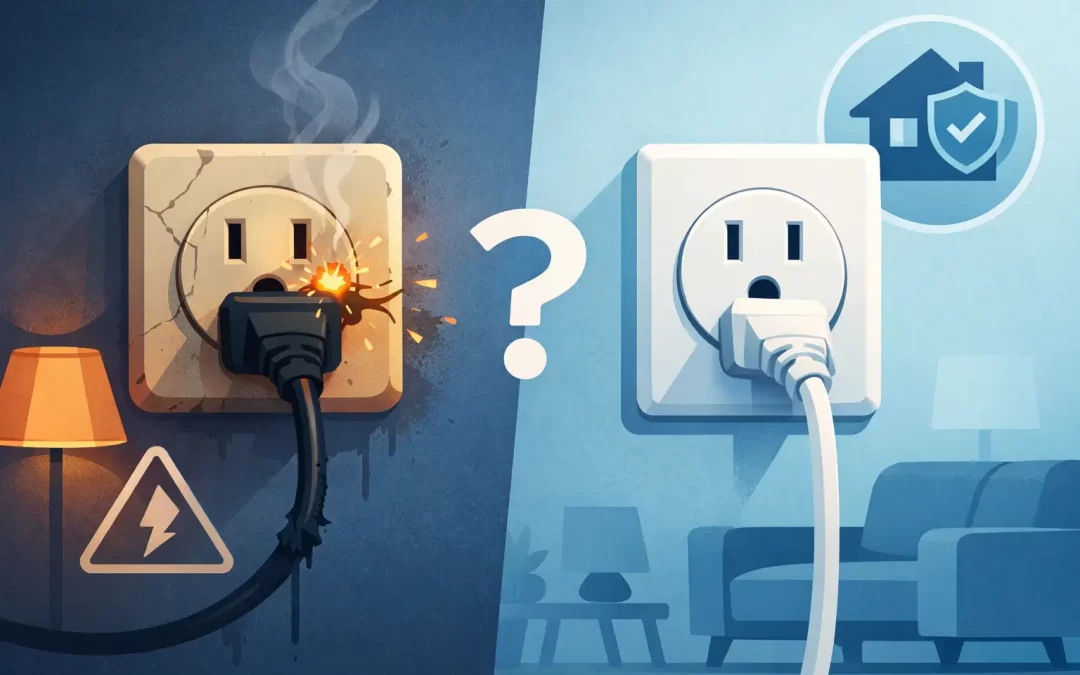
A socket that still powers a lamp can look perfectly harmless, even when the wiring behind it is showing its age. So, are old electrical sockets safe? Sometimes, yes – but only if they are in good condition, correctly installed and supplied by a circuit that is still safe. In an older home, the socket itself is only one part of the picture.
Ageing electrics are not always an emergency, and replacing every old-looking accessory is not automatically necessary. However, damaged sockets, loose connections and dated protective equipment can increase the risk of electric shock, overheating and fire. A qualified electrician can assess what is actually needed, without replacing work that remains safe and serviceable.
Are old electrical sockets safe if they still work?
Working is not the same as safe. An old socket may deliver power normally while concealed issues develop behind the faceplate or elsewhere on the circuit. Connections can loosen over time, cables can deteriorate, and past alterations may not meet the standards expected for a modern installation.
Many older sockets were well made and can remain safe for years. If the faceplate is secure, there is no visible damage or overheating, plugs fit firmly, and the circuit has been properly tested, age alone does not condemn it. That said, older installations often lack the protection now expected in homes, particularly RCD protection at the consumer unit.
An RCD, or residual current device, quickly disconnects the supply when it detects certain electrical faults. It provides an extra layer of protection against electric shock. Fitting new sockets does not automatically add this protection, so a proper inspection should look beyond the socket on the wall.
Warning signs that need prompt attention
Do not ignore a socket because a problem appears small. Heat and poor connections can worsen gradually, particularly on sockets used for kettles, heaters, tumble dryers, extension leads or other high-demand appliances.
Contact a qualified electrician promptly if you notice any of the following:
- A socket, plug or faceplate feels warm, smells burnt, or has brown marks around it.
- The faceplate is cracked, loose, yellowing from heat, or pulling away from the wall.
- Plugs fall out easily, wobble excessively or require force to insert.
- You hear buzzing, crackling or repeated clicking from a socket or switch.
- The power trips when a particular appliance is used, or fuses blow repeatedly.
- You see sparks, smoke or signs of melting.
If there is smoke, burning or a severe electrical fault, switch off the power at the consumer unit if it is safe to do so. Do not touch a hot or damaged socket, and do not continue using it while waiting for help. For an immediate danger or fire, call the emergency services.
A small flash can occasionally be seen as a plug is inserted or removed while an appliance is switched on, especially with higher-load equipment. It should not be treated as normal if it is frequent, large or accompanied by heat, noise or a burning smell. Switch the appliance off before unplugging it and have the socket checked.
What makes older sockets more risky?
The most obvious issue is physical wear. Socket contacts that no longer grip a plug properly can lead to arcing, where electricity jumps across a gap. This creates heat at the connection and can damage the socket or plug further.
There may also be concerns hidden from view. Older properties sometimes have ageing cable insulation, inadequate earthing, overloaded circuits or wiring altered by previous owners. Decorative work, DIY additions and kitchen upgrades can all leave behind electrical faults if they were not completed correctly.
Very old fittings deserve particular caution. Round-pin sockets, two-pin outlets and other obsolete accessories may not offer the level of safety or compatibility expected in a modern British home. Modern BS 1363 socket outlets have shuttered contacts and are designed to work with fused UK plugs. A property with unusual, damaged or clearly outdated outlets should be assessed rather than adapted with a collection of travel adaptors or extension leads.
Bathroom and kitchen sockets require extra care because water increases the consequences of an electrical fault. Standard sockets are generally not permitted within the defined zones around a bath or shower, and any electrical work in these areas needs careful planning and appropriate equipment.
A new socket is not always the whole answer
Replacing a tired faceplate can be a straightforward job, but it is not always the correct repair. If overheating has occurred, an electrician needs to find out why. The cause may be a loose terminal, a damaged cable, an overloaded circuit or a faulty appliance rather than the socket itself.
Similarly, installing attractive new sockets onto old wiring can improve the appearance of a room while leaving the underlying installation unchanged. There is nothing wrong with updating accessories where testing confirms the circuit is sound. But where cables, earthing or consumer unit protection are inadequate, a wider repair or partial rewire may offer better long-term value and safety.
This is why a visual check has limits. Never remove a socket faceplate or attempt to tighten terminals yourself unless you are competent to do so and the circuit has been safely isolated and proven dead. Electrical work can expose live conductors, and an apparently simple task can reveal more complex faults.
When to arrange an electrical inspection
For homeowners, an Electrical Installation Condition Report, often called an EICR, is a sensible way to understand the condition of older electrics. The electrician carries out testing and inspection to identify damage, deterioration, defects and departures from current safety requirements. The report helps you prioritise repairs based on risk rather than guesswork.
An inspection is especially worthwhile when you have moved into an older property, are planning a new kitchen or bathroom, notice recurring tripping, or have no record of recent electrical testing. It is also a sensible precaution before adding high-load appliances, electric heating or a home charging point.
Landlords in England have specific duties to ensure electrical installations are inspected and tested at least every five years, or more often if the report recommends it. They must also provide the required report to tenants and take action on issues identified within the appropriate timescales. Replacing a visibly old socket does not remove those wider responsibilities.
Practical steps while you wait for an electrician
Until a suspected issue has been checked, stop using the affected socket. Move appliances to another suitable socket if needed, but avoid running several extension leads around the room or plugging one extension lead into another. This can overload sockets and creates a trip hazard.
Use quality plugs and leads that are undamaged and correctly fused. Do not overload a single double socket with high-wattage appliances, even if a multiway adaptor allows it. Portable heaters, kettles, washing machines and tumble dryers should be used with particular care because they draw significant current.
It is also worth testing the RCD at your consumer unit using its labelled test button, following the manufacturer’s instructions. If it does not operate as expected, or you are unsure which device controls what, arrange professional advice. Do not rely on an RCD test as proof that every socket and cable in the property is safe.
Choosing the right repair for your property
The right solution could be as simple as replacing a damaged socket, or it may involve fault diagnosis, circuit repairs, consumer unit improvements or a rewire. The decision should be based on inspection results, how the property is used and the condition of the wider installation.
A reliable electrician will explain the issue clearly, make the area safe and set out practical options. CKT Boilers can help homeowners and landlords across London and the South East with electrical fault diagnosis, inspections, installations and rewiring work carried out with care for your home.
If an old socket has started to feel loose, warm or unreliable, treat it as an early warning rather than an inconvenience. A prompt professional check can protect your property, your appliances and the people who use them every day.