Cold patches at the bottom of radiators, rooms that take too long to warm up and a boiler that seems to work harder than it used to are all frustrating signs. A power flushing service may be the right answer when the problem is caused by sludge and debris circulating through your central heating system, rather than a fault with the boiler itself.
For homeowners and landlords, the aim is simple: reliable heat, dependable hot water and a system that is not wasting energy trying to push water through partially blocked pipes and radiators. Power flushing is a targeted way to clean an existing system and help it perform as it should.
What is a power flushing service?
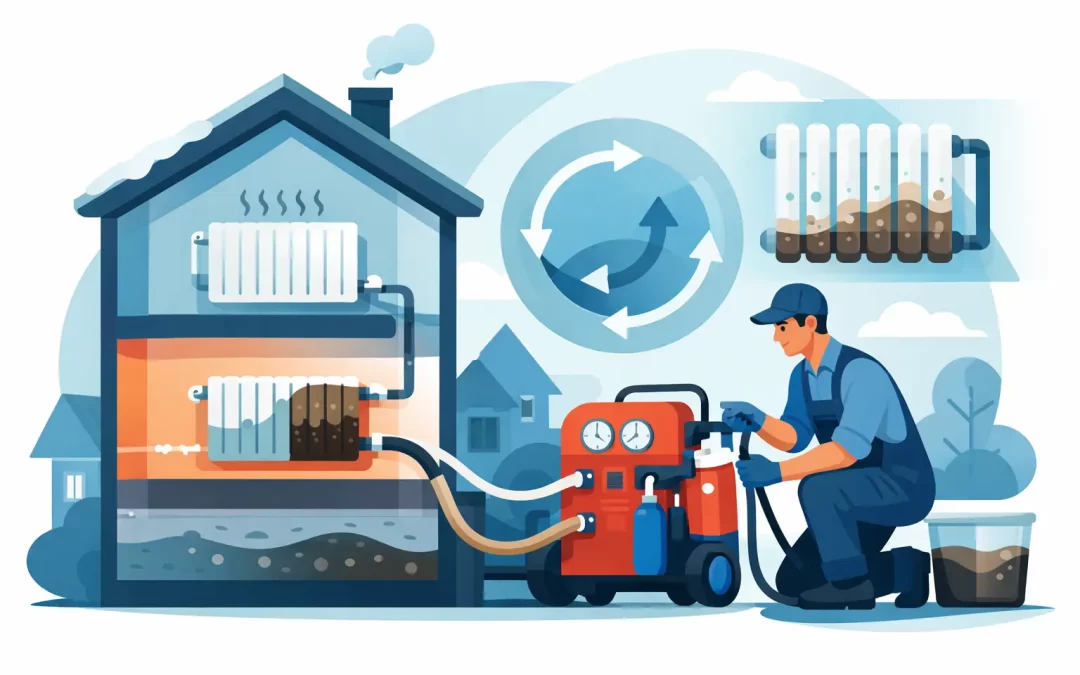
Over time, the water inside a central heating system can collect rust, scale and black iron oxide sludge. This happens naturally as metal components gradually corrode. The debris settles in radiators, pipework, pumps, valves and heat exchangers, restricting the flow of hot water around the property.
A power flushing service uses a specialist high-flow machine connected to the heating system. Water and approved cleaning chemicals are circulated through the pipework and radiators to loosen and remove built-up contamination. An engineer will usually flush radiators in turn, often changing the direction of flow to shift debris from areas where it has settled.
The process is designed to clean the system without removing every radiator or replacing all the pipework. Once the flush is complete, the system is refilled with clean water and a corrosion inhibitor is added. This treatment helps reduce future internal corrosion and protects the system from further sludge build-up.
It is not a cosmetic clean or a quick fix for every heating fault. It is a practical maintenance and repair solution for systems affected by internal debris.
Signs you may need a power flushing service
Heating problems do not always mean you need a new boiler. If the boiler is relatively modern but heat is not travelling effectively around the home, the condition of the system water should be considered.
Common warning signs include radiators that are hot at the top but cold at the bottom, some rooms warming properly while others stay chilly, and radiators needing frequent bleeding. You may also notice discoloured water when a radiator is bled, noisy pipework, a circulation pump that sounds strained or a boiler that regularly shuts down or displays a flow-related fault.
Rising heating bills can be another clue. A restricted system needs more time and energy to reach the thermostat setting. While poor insulation, an ageing boiler and incorrect controls can also affect fuel use, sludge should not be overlooked where radiator performance has gradually declined.
A qualified engineer can assess the symptoms before recommending work. In some cases, a stuck thermostatic radiator valve, trapped air, an incorrectly balanced system or a faulty pump may be the real issue. A good diagnosis matters because power flushing is most effective when contamination is genuinely the cause.
How the power flushing process works
Before starting, the engineer checks the boiler, radiators and visible pipework to make sure the system is suitable for flushing. They will look for existing leaks, weak fittings and signs that parts may already be failing. Cleaning a badly neglected system can sometimes reveal issues that sludge had been masking, so it is better to identify risks honestly from the outset.
The flushing machine is then connected to the system, often at the pump or another suitable access point. A cleaning solution is introduced and circulated at high flow. This is different from simply draining and refilling the system, which may remove some dirty water but often leaves settled sludge behind.
Each radiator is treated methodically. The engineer may use controlled agitation or flow reversal to help release debris, while a magnetic filter captures metallic particles. The water is monitored until it runs clear and the system is sufficiently clean.
After flushing, the system is thoroughly rinsed, refilled and treated with inhibitor. The radiators are bled, pressure is checked and the heating is run to confirm that heat is circulating properly. The system may also need balancing, so each radiator receives the right share of hot water rather than one room overheating while another remains cold.
The job can take several hours and may take most of a day for a larger property or a system with significant contamination. The exact duration depends on the number of radiators, the layout of the pipework and how heavily sludged the system is.
What difference can power flushing make?
When sludge is the underlying problem, a thorough flush can improve radiator heat-up times and make temperatures more even from room to room. It can also reduce strain on the boiler pump and other moving parts by allowing water to circulate more freely.
This is especially valuable before fitting a new boiler. Installing an efficient boiler onto a dirty, contaminated heating system can put its heat exchanger and controls at unnecessary risk. Manufacturers commonly require the system to be cleaned and treated as part of a compliant installation, and doing so helps protect the performance and warranty of the new appliance.
For an existing boiler, cleaner system water may reduce the chance of blockages and flow faults. It can also help the boiler operate more efficiently, although savings will vary. A flush cannot turn an old, inefficient boiler into a new model, repair damaged radiators or resolve heat loss caused by poor insulation. Its benefit depends on the condition of the entire heating system.
Power flushing versus a simple system clean
Not every heating system requires a full power flush. On a newer system with only light contamination, an engineer may recommend a chemical clean, filter clean or targeted repair instead. These options can be appropriate where water quality is still reasonably good and circulation problems are limited.
A power flush is generally more suitable where there are widespread cold spots, repeated blockages, dirty water throughout the system or evidence of long-term sludge. It may also be recommended after major work, such as replacing a boiler, adding radiators or repairing a damaged section of pipework, depending on the condition of the system.
There are situations where replacement is the more sensible route. Very old radiators with internal corrosion, persistent leaks or severely restricted pipework may not respond fully to cleaning. A professional should explain the likely outcome, any risks and whether repair, flushing or replacement gives the best value over time.
Protecting your heating system after flushing
The work does not end when the heating comes back on. A corrosion inhibitor should remain in the system, and its level may need checking during future boiler servicing. A magnetic system filter can also provide ongoing protection by catching fine metallic debris before it reaches sensitive boiler components.
Keep annual boiler servicing up to date and act early if radiators begin developing cold areas again. Regularly bleeding radiators is useful when air is present, but avoid repeatedly topping up a sealed system without finding the cause. Fresh water introduces oxygen, which can accelerate corrosion inside the pipework.
If you are planning a boiler replacement, radiator upgrade or central heating repair, ask how the existing system water will be assessed and treated. It is a small detail that can make a meaningful difference to the reliability of the whole installation.
CKT Boilers provides practical heating support across Middlesex, London and the wider South East, with qualified engineers who can investigate poor circulation and advise on the right next step for your home. Whether a power flush is worthwhile depends on the evidence, not a one-size-fits-all recommendation.
A warm home should not depend on turning the thermostat higher and hoping for the best. If your radiators are uneven or your boiler is working harder than it should, arranging a professional assessment can help you deal with the cause before a minor circulation issue becomes a more costly heating problem.