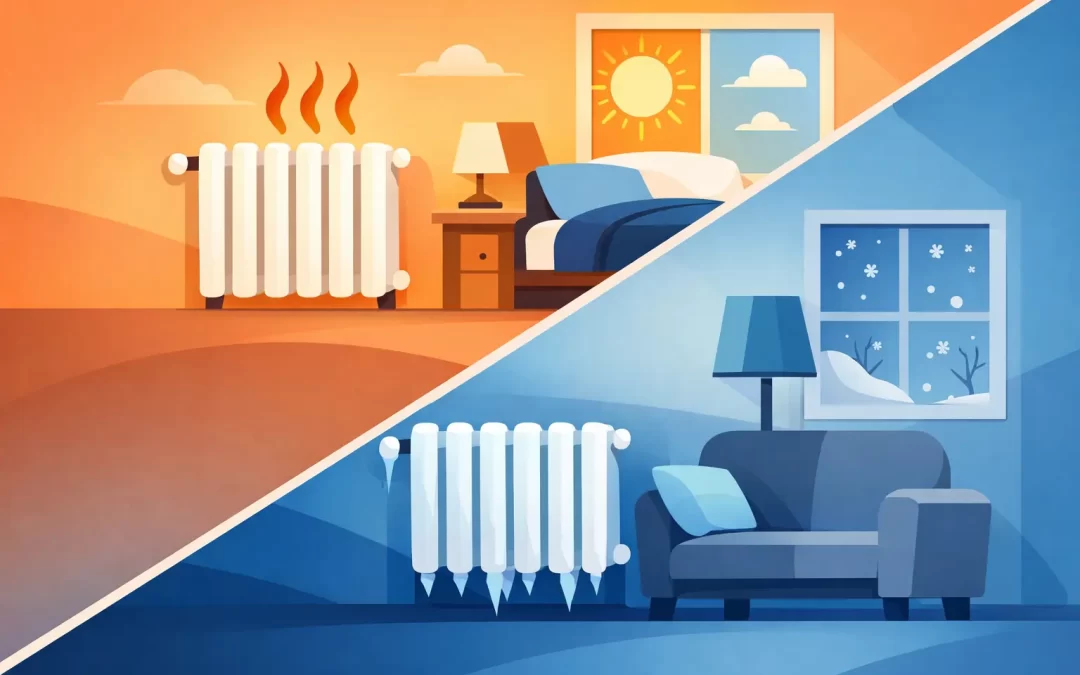
You turn the heating on, head downstairs expecting warmth, and the radiators stay stubbornly cold while the rest of the house seems to heat up. If you are wondering why radiators are cold downstairs, the answer is usually not one single fault but a circulation issue somewhere in the system.
In many homes, this problem comes down to trapped air, poor balancing, sludge in the pipework, a pump issue, or a faulty valve. Sometimes it is a small fix. Sometimes it is a sign your heating system needs proper attention before it gets worse. The key is working out whether the issue affects one radiator, every downstairs radiator, or the whole lower floor.
Why are radiators cold downstairs while upstairs gets hot?
When upstairs radiators heat properly and downstairs ones do not, it often points to how water is moving around your heating system. Hot water should circulate evenly from the boiler through the pipework and into each radiator. If that flow is restricted, the radiators that are hardest to reach – often the downstairs ones, depending on the pipe layout – can end up cold or only partly warm.
That might sound backwards, because many people assume heat naturally rises so upstairs radiators must somehow get priority. In reality, your central heating relies on pumped circulation, not gravity. If the system is working correctly, radiators on both floors should heat consistently.
Older properties and systems that have not been serviced for a while are more likely to show this sort of uneven heating. Build-up inside the pipework, worn components and poor setup after previous works can all contribute.
The most common causes
Air trapped in the system
Airlocks can stop hot water reaching parts of the system properly. If there is trapped air in the downstairs pipework or in individual radiators, those radiators may stay cold at the top, cold all over, or take far longer to warm up than the rest.
If only one radiator is affected and it is cold at the top but warm at the bottom, bleeding it may solve the issue. If several downstairs radiators are cold, especially after the system has been drained or topped up, there may be a wider air problem that needs more than a quick bleed.
Sludge and debris in the radiators or pipes
This is one of the most common reasons for poor heating performance. Over time, corrosion inside a central heating system creates black sludge that settles in radiators and low-level pipe runs. Downstairs radiators can be particularly affected because debris often collects in lower sections of the system.
A radiator full of sludge may feel warm at the top and cold at the bottom. If several radiators behave like this, or some never get fully hot no matter how long the heating is on, the system may need cleaning or powerflushing. Leaving sludge untreated can also put extra strain on the boiler and pump.
A heating pump problem
The pump moves hot water around your heating system. If it is failing, set incorrectly or sticking, circulation can become weak. That often shows up as radiators heating unevenly, with some hot and others barely warming through.
Pump issues can be difficult to spot without testing. You might notice the boiler fires up but the heat does not travel properly around the house, or the system takes much longer than usual to respond. In some cases the pump is noisy. In others, there is little obvious warning at all.
The system is out of balance
Balancing controls how much hot water flows through each radiator. If the system is poorly balanced, radiators closer to the boiler or on easier pipe runs can heat up quickly while others struggle.
This often happens after new radiators are fitted, valves are replaced, or previous work has changed the system setup. It is not necessarily a fault with the boiler itself. It is more about distribution. A proper balance can make a big difference to comfort and efficiency.
Faulty thermostatic radiator valves or lockshield valves
Sometimes the issue sits at the radiator rather than in the wider system. A thermostatic radiator valve can stick shut, especially after months of not being used. Lockshield valves can also be closed too far or adjusted incorrectly.
If one downstairs radiator is cold while the pipe leading to it is hot, the valve may be the cause. If several radiators are affected, it is less likely to be just a single stuck valve, although multiple older valves can certainly cause patchy performance.
Low system pressure or a wider boiler issue
If you have a sealed system boiler and the pressure is too low, hot water may not circulate properly. This can lead to poor radiator performance across the house, not just downstairs. You may also notice fault codes, kettling noises or the boiler switching itself off.
Low pressure is not always the root cause. If you keep topping the system up, there may be an underlying leak or another fault that needs investigating.
What you can check safely yourself
Before booking an engineer, there are a few sensible checks you can carry out.
Look at whether the problem affects one radiator or all downstairs radiators. That helps narrow things down quickly. If it is just one, check whether the thermostatic valve is turned up and whether the radiator needs bleeding. If it is cold at the top, trapped air is likely. If it is cold at the bottom, sludge is more likely.
Check the boiler pressure if you have a combi or sealed heating system. Most boilers work best within a marked pressure range shown on the gauge. If it is too low, your manufacturer’s instructions will explain the correct refill process. If pressure drops again, stop there and get it looked at.
You can also feel the pipework carefully once the heating has been on for a while. If one side of a radiator is hot and the other stays cold, or the pipes are hot but the radiator is not, that points towards a valve or circulation issue.
What you should not do is start dismantling valves, opening sealed components or interfering with the boiler casing. Heating systems can be messy at best and unsafe at worst when handled incorrectly.
When the problem needs a heating engineer
If bleeding the radiator and checking the pressure do not solve it, professional diagnosis is usually the quickest route. That is especially true if multiple radiators downstairs are affected, the issue keeps coming back, or your boiler is showing signs of strain.
A qualified engineer can check pump performance, confirm whether the system is balanced, test valves properly and identify sludge build-up in the radiators and pipework. In some cases, the fix is straightforward. In others, the system may need a deeper clean or component replacement.
There is a trade-off here. A quick fix might restore heat for now, but if the underlying cause is sludge or poor circulation, the problem often returns. Dealing with the root cause is usually better for long-term reliability and running costs.
Why this issue should not be ignored
Cold downstairs radiators are not just an annoyance. They can mean your heating system is working harder than it should, using more energy and delivering less comfort. Rooms take longer to warm up, the boiler may cycle inefficiently, and some parts of the home remain chilly no matter how high you turn the thermostat.
For landlords, this can quickly become a tenant comfort issue. For homeowners, it often shows up first as uneven heating and later as bigger repair bills. If sludge is involved, leaving it untreated can shorten the life of both the boiler and other heating components.
It is also worth considering the age of the system. In an older property, recurring cold radiator issues may be a sign that the heating setup needs more than another temporary repair. Good diagnosis matters. You do not want to pay for the wrong fix.
Why are radiators cold downstairs after bleeding?
If you have already bled the radiators and they are still cold downstairs, trapped air probably was not the main problem. That usually points more towards sludge, poor balancing, a stuck valve, or weak pump circulation.
It can also happen when fresh air is repeatedly entering the system due to another fault. If you keep needing to bleed radiators, there may be a leak, corrosion issue or pressure problem that needs proper investigation.
Getting the right fix
The right repair depends on the pattern of the fault. One cold radiator calls for a different approach than an entire floor failing to heat. That is why a proper heating check is so important. Guesswork often leads to repeat call-outs and more disruption than necessary.
At CKT Boilers, this is the sort of issue we see regularly across homes in London and the South East. The aim is always the same – find the cause, explain it clearly, and get your heating working properly again without overcomplicating the job.
If your downstairs radiators are staying cold while the rest of the house heats up, treat it as an early warning rather than something to put off until winter really bites.