
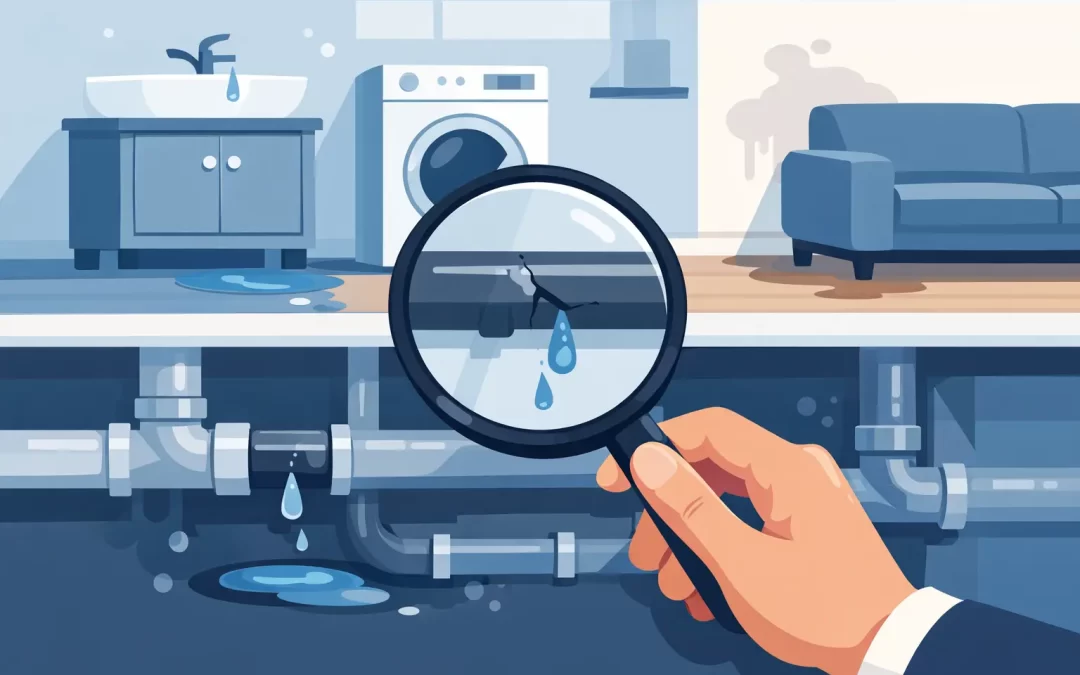
A hidden leak rarely announces itself with a dramatic burst pipe. More often, it starts with a slightly higher water bill, a patch of peeling paint or a musty smell in a room that is usually dry. Knowing how to spot hidden plumbing leaks can help you act before a small fault turns into damaged flooring, mould growth or a more disruptive repair.
For homeowners and landlords, early action matters. Water can travel some distance from the source of a leak, particularly beneath floors and behind walls, so the first visible sign is not always where the pipework has failed.
The signs of a hidden plumbing leak
The most common warning signs are changes around your home that cannot be explained by normal use. A single sign may have another cause, but several appearing together are a good reason to investigate.
Unexplained increases in your water bill
If your household routine has not changed but your metered water use has risen, water may be escaping somewhere out of sight. This is particularly worth checking if you have not filled a paddling pool, had guests staying or started watering the garden more frequently.
A water bill alone cannot identify the location or type of fault. It can, however, tell you that a simple check is worthwhile before the issue becomes more expensive.
Damp patches, staining or peeling finishes
Keep an eye on ceilings below bathrooms, kitchens and airing cupboards, as well as walls shared with a shower, basin, washing machine or dishwasher. Yellow or brown staining, bubbling paint, lifting wallpaper and a patch that feels cooler or softer than the surrounding area can all indicate moisture behind the surface.
Do not assume every mark is an old one. Gently press the area and note whether it feels damp, has grown or has changed colour. Fresh water damage often gets worse after a shower, bath or appliance cycle.
A musty smell or recurring mould
Condensation can cause mould, especially in poorly ventilated bathrooms, but recurring mould in one small area can also be a clue that water is entering the room from elsewhere. A persistent musty odour in a cupboard, under the stairs or near a boxed-in pipe should not be ignored.
Mould around silicone seals may simply mean the seal needs cleaning or replacing. Mould appearing on a wall, ceiling or skirting board away from usual condensation points needs closer attention.
Changes to floors, walls and woodwork
Water beneath a floor can make laminate edges swell, vinyl lift and timber boards warp or become unusually springy. Skirting boards may separate from the wall, while plaster can crack or crumble as it becomes saturated.
In older properties across London and the South East, pipework may run below suspended timber floors or through solid walls. This can make a slow leak difficult to see, but it also means slight movement in finishes can be an early warning rather than a purely cosmetic problem.
Sounds when no water is being used
A faint hiss, drip or rushing sound in a quiet house is worth checking, especially when taps, toilets, appliances and heating are not running. Listen near kitchens, bathrooms, utility areas and hot water cylinders.
Bear in mind that heating systems may make normal expansion noises as they warm up and cool down. The concern is a steady sound that continues when there is no obvious reason for water to be moving.
How to spot hidden plumbing leaks with a water meter test
If your home has an accessible water meter, it provides one of the most useful first checks. Choose a time when everyone in the property can avoid using water for at least 30 minutes. Do not run taps, flush toilets, use washing machines or dishwashers, and make sure any automatic appliance is not about to start a cycle.
Take a photograph of the meter reading, including the small moving dial or digits if fitted. Check it again after the waiting period. If the reading has changed, water is being used or lost somewhere in the property.
This test does not prove that a pipe beneath the floor is leaking. A toilet cistern that is silently overflowing into the pan, a dripping tap or a faulty filling valve can produce the same result. Check these accessible fittings first. If there is no obvious cause and the meter continues to move, arrange for a qualified plumber to investigate.
Properties without a meter can still be checked through visible signs and careful monitoring of usage, although the diagnosis is less precise.
Check the places where leaks commonly start
Start with areas you can safely inspect without taking anything apart. Open the cupboards under sinks and look at pipe joints, isolation valves and appliance connections. Run a dry piece of kitchen roll around accessible fittings – even a very small amount of moisture will show quickly.
Look behind the toilet pan and around the base of the cistern. A leaking flush valve can send water continuously into the toilet without leaving a puddle on the floor. Add a few drops of food colouring to the cistern, wait without flushing, and see whether colour appears in the pan. If it does, the cistern may be leaking internally.
In bathrooms, examine seals around showers, baths and basins. Failed sealant or damaged grout allows water to work behind tiles and into walls, particularly where the shower is used daily. This is not always a plumbing pipe leak, but it can cause similar damage and needs prompt repair.
Also inspect radiator valves, pipe entries and the area around your boiler or hot water cylinder. On sealed central heating systems, a falling pressure gauge may point to a leak in the heating circuit. It could be a visible radiator valve, a pressure relief discharge pipe or pipework concealed below floors. Repeatedly topping up a system is not a long-term fix and can lead to corrosion and poorer heating performance.
What not to do when you suspect a leak
Avoid cutting into walls, lifting fitted flooring or removing bathroom panels without a clear plan. Water can affect electrical wiring, and unnecessary opening-up work can create further damage. A professional can use appropriate diagnostic methods to narrow down the likely source before repairs begin.
Do not keep using a leaking shower, appliance or toilet because the water seems minor. A slow leak can cause significant damage over weeks or months. If water is close to sockets, light fittings, consumer units or other electrical equipment, switch off the affected circuit only if it is safe to do so and seek urgent professional advice.
For a more serious leak, turn off the internal stopcock if you can do so safely. It is sensible to find this in advance. It is often located under the kitchen sink, near the front door, in a utility cupboard or where the water supply enters the property. Turn taps on after shutting off the supply to release pressure, then contact a plumber.
When to call a plumber
Call for professional help if your water meter moves when all water is off, damp patches are spreading, your ceiling is bulging, or you cannot identify the source. The same applies if boiler pressure keeps dropping, a floor feels soft, or you suspect water has reached electrics.
A qualified plumber can assess visible pipework, sanitary fittings and appliances, then investigate concealed pipework with as little disruption as reasonably possible. The right repair depends on the cause. Replacing a worn valve, repairing a failed shower seal and locating a leak beneath a floor are very different jobs, so accurate diagnosis protects both your home and your budget.
For homeowners and landlords in Middlesex, London and the surrounding South East, CKT Boilers can help investigate plumbing concerns and carry out repairs with care for your property. If something looks or smells wrong, take a few photos, make a note of when it occurs and arrange an inspection before the evidence – and the damage – grows.