
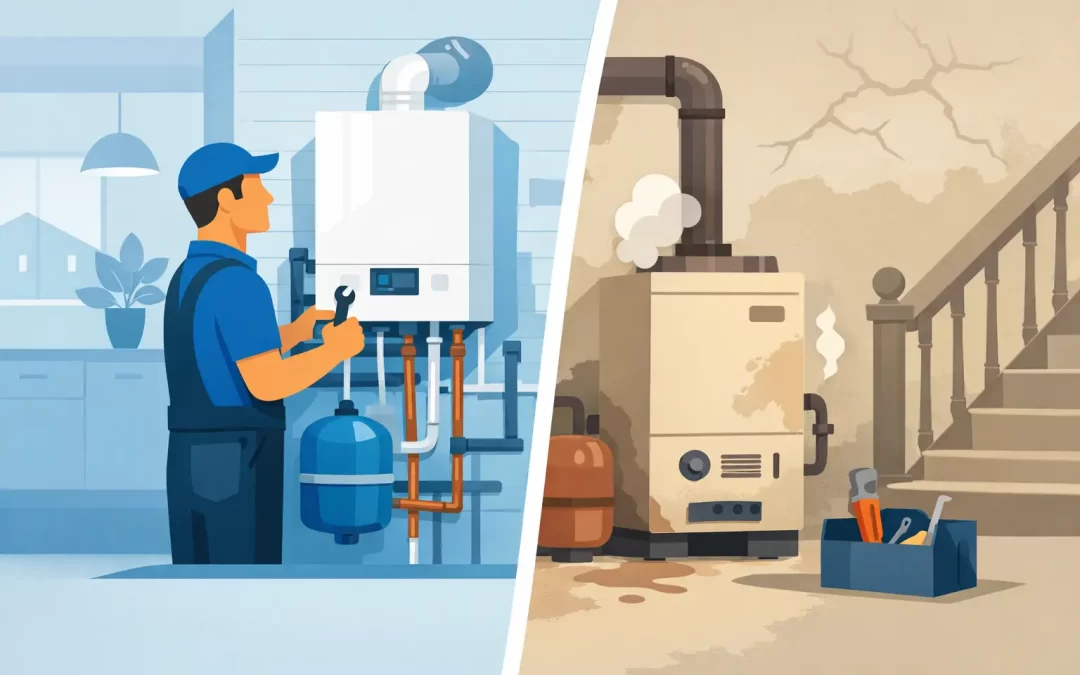
Older homes rarely make heating upgrades straightforward. A boiler may sit in an airing cupboard built around an old cylinder, serve radiators added at different times, or rely on pipework that has been working hard for decades. Boiler replacement in an older property is therefore about more than choosing a newer boiler. It is a chance to assess the whole heating system properly, improve reliability and protect your home from avoidable disruption later.
A modern boiler can reduce energy waste and give you more dependable heating and hot water, but the best result comes from an installation designed around the property rather than a like-for-like swap carried out in a hurry.
Why older properties need a closer look
Many period and older homes across London and the South East have been altered over the years. Extensions, loft conversions and replacement radiators can all change the demand placed on the heating system. The boiler that suited the home 15 or 20 years ago may no longer be the right size, type or location.
Older systems can also contain sludge, corrosion and debris. These build up inside radiators and pipework over time, restricting circulation and creating cold spots. Fitting a new boiler onto a dirty system can affect its performance from day one, so cleaning and protecting the system should be part of the discussion.
The property itself matters too. Older walls, limited insulation, draughts and single-glazed areas can all increase heat loss. That does not always mean you need the largest boiler available. Oversizing can cause inefficient operation. A qualified heating engineer should assess your hot water use, radiator output and the heat requirements of the home before recommending a boiler.
Checks before boiler replacement in an older property
A proper survey is the most useful first step. It gives you a clearer idea of what is required, rather than discovering extra work once the old boiler has been removed.
Pipework, radiators and system water
The existing pipework needs to be suitable for the proposed boiler and capable of delivering adequate flow around the home. In some properties, older small-bore pipework or alterations made over several decades may limit how effectively a modern system operates.
Radiators should be checked for leaks, corrosion, poor heat output and correct sizing. A radiator that was adequate for a small sitting room may no longer heat the space after an extension has changed the layout. Powerflushing or another appropriate cleaning method may be recommended where there is evidence of sludge. Once the system is clean, inhibitor helps protect it against future internal corrosion.
Flue route and ventilation
Every gas boiler needs a safe, manufacturer-compliant flue arrangement. This can be more complicated in older homes, particularly where the boiler is installed in a cupboard, basement, roof space or internal room. The flue route, terminal position and required clearances all need to be assessed before work begins.
A boiler cannot simply be moved or boxed in without considering future servicing access and safety. An engineer should be able to inspect key components and the flue properly after installation. If the current location is unsuitable, relocating the boiler may be the safer long-term choice, even though it can involve additional pipework and making good afterwards.
Condensate drainage and electrical supply
Modern condensing boilers produce condensate, which needs a suitable drain route. In older properties, creating this route can be one of the practical challenges. External condensate pipework must be installed with protection against freezing where required, while internal drainage routes may need careful planning to avoid unnecessary disruption.
The boiler also needs a safe electrical supply and the correct controls. If the wiring is dated, damaged or does not meet the needs of the new installation, electrical work may be required. This is particularly relevant when fitting smart controls, upgrading a heating programmer or replacing an old system with multiple zones.
Choosing the right boiler setup
The right boiler depends on the household, not just the number of bedrooms. A combi boiler is often a good option for smaller homes and flats where space is limited and hot water demand is modest. It provides heating and hot water directly from the boiler, removing the need for a separate hot water cylinder.
However, a combi may not be ideal for a larger household with two bathrooms used at the same time. Water pressure and incoming mains flow are key considerations. If the mains supply cannot support the expected demand, changing to a combi could lead to disappointing shower performance, however efficient the new boiler is.
A system boiler with a hot water cylinder can be the better option for larger homes or families who use several outlets at once. It takes up more space, but it can provide a stronger and more consistent hot water supply where the cylinder is correctly sized. In an older property with an existing cylinder, replacement may be simpler than converting the whole system, although an old vented cylinder and tanks may still benefit from an upgrade.
Controls deserve equal attention. Modern thermostats, programmable controls and thermostatic radiator valves give households more control over when and where heat is used. Zoning may be worthwhile in a larger property, allowing different parts of the home to be heated separately. The goal is practical comfort, not technology for its own sake.
What a well-planned installation should include
A quality boiler installation is not just about fitting the appliance to the wall. Your engineer should explain the proposed boiler, location, controls, flue route and any supporting work before the installation begins. You should know whether system cleaning, radiator changes, electrical upgrades or pipework alterations are included in the quotation.
The old boiler should be isolated and removed safely, and the new appliance installed in line with the manufacturer instructions and current requirements. The system should then be filled, tested, commissioned and balanced so radiators heat as evenly as possible. The engineer should demonstrate the controls and provide the documentation you need, including warranty information and building compliance records where applicable.
Always use a Gas Safe registered engineer for gas boiler work. This is essential for the safety of your household and for ensuring the installation meets the required standards. Choosing an installer experienced in older homes can also reduce surprises, because they understand that access, hidden pipework and historic alterations often need extra care.
Managing cost without cutting corners
The cost of replacing a boiler in an older property varies because no two systems are identical. A straightforward replacement in the same position is generally less involved than moving a boiler, converting from a conventional system to a combi, replacing a cylinder or upgrading unsuitable pipework.
It can be tempting to focus only on the boiler price, but installation quality, suitable controls, system protection and aftercare all contribute to value. A cheaper installation that overlooks dirty water, poor circulation or an unsuitable flue route can create further expense later. Ask for a clear scope of work so you can compare quotations fairly.
For homeowners facing an urgent breakdown, finance options may make a necessary replacement more manageable through monthly payments. The key is to make a considered decision without delaying essential safety work or settling for a system that does not meet the household’s needs.
When replacement is likely the sensible option
Frequent repairs, unreliable hot water, rising running costs and parts that are difficult to source are all signs that an ageing boiler may be nearing the end of its useful life. A boiler does not need to have failed completely before replacement becomes the sensible choice. Planned work gives you time to arrange a survey, choose the right system and avoid the pressure of losing heating in cold weather.
If your radiators take a long time to warm up, some rooms never feel comfortable or the boiler pressure regularly drops, the wider heating system may also need attention. These issues are not always solved by a new boiler alone, which is why a whole-system assessment matters.
CKT Boilers can assess the condition of your existing heating system, explain the practical options and carry out boiler installations with the care an older property deserves. The right replacement should leave you with more than a new appliance – it should give you dependable warmth, reliable hot water and confidence when the colder months arrive.