
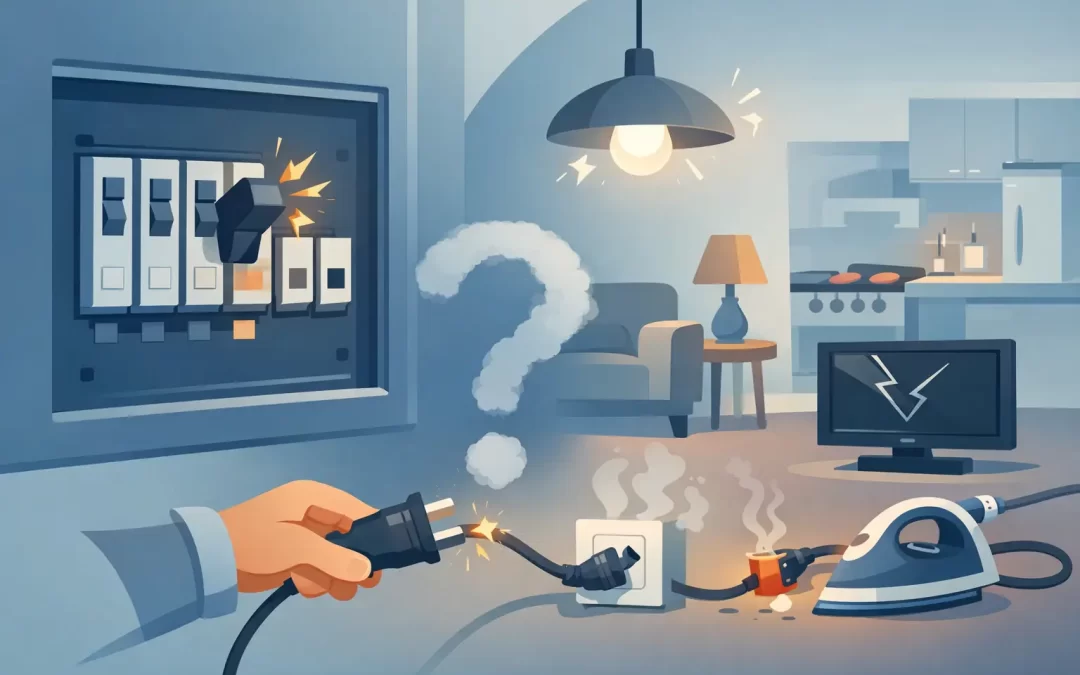
A fuse box that keeps tripping is more than an inconvenience when you are trying to cook dinner, work from home or keep the heating running. If you are asking what causes frequent fuse tripping, the short answer is that your electrical system has detected a fault and disconnected the supply to help prevent electric shock, overheating or fire.
Many homes still call the consumer unit a fuse box, although most modern systems use circuit breakers and RCDs rather than replaceable fuses. Whatever equipment you have, frequent tripping should be treated as a warning sign, not something to work around by repeatedly switching the power back on.
What causes frequent fuse tripping?
The cause depends on which switch has tripped, what was running at the time and whether the problem affects one circuit or the whole property. A single trip after plugging in a particular appliance may have a straightforward cause. A circuit that will not reset, trips at random, or trips when moisture is present needs prompt professional attention.
The most common causes are an overloaded circuit, a faulty appliance, a short circuit, an earth fault, damaged wiring or a fault within the consumer unit itself. Older properties can be more vulnerable, particularly where electrical alterations have been made over time or the installation has not been inspected recently.
An overloaded circuit
An overload happens when too many appliances draw power from the same circuit at once. Kitchens are a common example: a kettle, toaster, microwave, dishwasher and washing machine can place a heavy demand on the supply, especially if several are connected through extension leads.
Circuit breakers are designed to trip before cables overheat. If the circuit stays on after you unplug or switch off a few items, an overload may have been the issue. If it keeps tripping with very little connected, there is likely to be another fault.
Avoid treating extension leads as a permanent answer to a shortage of sockets. Daisy-chaining adaptors or extension leads can overload a circuit and makes it harder to identify where the problem lies.
A faulty appliance
A defective appliance is one of the most frequent reasons for a circuit breaker or RCD to trip. The fault may be obvious, such as a damaged flex or a burning smell, but it can also be hidden inside an appliance. Washing machines, tumble dryers, dishwashers, kettles, irons and outdoor electrical equipment are all common culprits because they use heating elements, motors or are exposed to water.
If the power trips when a specific appliance is plugged in or switched on, unplug it and leave it disconnected. Do not continue using it just because it works intermittently. A qualified electrician or suitably competent appliance repair specialist can advise whether it is safe and economical to repair.
A short circuit
A short circuit occurs when live and neutral conductors come into contact where they should not. This creates a sudden surge of current, causing the protective device to trip quickly. It may be caused by damaged cable insulation, loose connections, a faulty light fitting or a failed appliance.
You may notice a sharp pop, a smell of hot plastic, scorch marks or a trip that happens immediately when a switch is operated. Turn off the affected circuit if you can do so safely and arrange an inspection. Do not remove socket fronts, light fittings or consumer unit covers to investigate yourself.
An earth fault or RCD trip
An RCD, or residual current device, monitors electricity flowing through a circuit. It trips when it detects current leaking to earth, which can happen if a cable is damaged, water gets into electrical equipment, or an appliance develops an insulation fault. Its job is to reduce the risk of a serious electric shock.
RCD trips are often associated with bathrooms, kitchens, garages, garden sockets and appliances connected outdoors. Condensation, a leaking pipe, driving rain or a damaged outside fitting can all introduce moisture where it should not be. This is why a recurring trip after rain should never be ignored.
How to identify the affected circuit safely
Start by checking the consumer unit without touching any exposed wiring. Look for a switch sitting lower than the others or marked as off. Labels may identify circuits such as sockets, lights, cooker, boiler, upstairs or downstairs. In newer consumer units, the main RCD may control several circuits, so one fault can interrupt power to more than one part of the home.
Switch off and unplug appliances on the affected circuit before attempting one reset. This includes chargers, lamps and items hidden behind furniture, not just the appliance you were using when the power went off. If the breaker resets and remains on, reconnect appliances one at a time. If it trips when a particular item is reconnected, leave that item unplugged.
This basic process can help isolate an appliance fault, but it is not a substitute for electrical diagnosis. Stop and call an electrician if the breaker will not reset, trips straight away with everything unplugged, or you are unsure which circuit is involved.
Never hold a breaker in position, fit a higher-rated fuse, bypass an RCD or keep resetting a switch that trips repeatedly. These protective devices are there to protect the wiring in your home and the people living in it.
Signs that need urgent electrical attention
A single trip caused by an overloaded socket can sometimes be resolved by reducing the load. Other symptoms call for a qualified electrician without delay. These include a burning smell, buzzing from a socket or consumer unit, scorch marks, sparks, tingling from metal fittings, visible cable damage, smoke, or a circuit that has failed completely.
If there is smoke, fire or an immediate danger, leave the property if necessary and contact the emergency services. Do not use water on an electrical fire. If the problem involves water near electrical fittings, avoid touching the area and isolate power only if it is safe to do so.
Landlords also have clear responsibilities to keep the fixed electrical installation safe. A tenant reporting repeated tripping should be taken seriously, even if the circuit appears to reset afterwards. A fault can worsen over time and may affect essential services such as lighting, refrigeration, smoke alarms or the boiler controls.
Why boiler and heating circuits can trip
A boiler is often supplied from a fused spur rather than a plug socket, and a tripped electrical circuit can leave you with no heating or hot water. The cause may be within the boiler, its controls, pump, wiring centre or nearby electrical supply. It may also be unrelated to the heating system if the entire sockets or RCD circuit has tripped.
Do not remove the boiler casing or interfere with its internal electrical components. Gas appliances and their controls should be checked by appropriately qualified professionals. If your boiler has lost power after an electrical trip, an electrician can establish whether the supply and fixed wiring are safe, while a Gas Safe engineer can investigate a fault within the appliance itself.
Preventing repeat trips in your home
Prevention begins with not overloading sockets and replacing damaged leads, plugs and accessories promptly. Use suitable outdoor-rated equipment outside, keep electrical items away from leaks and splashes, and make sure bathroom and kitchen alterations are completed to the correct standard.
Older homes, extensions, converted lofts and properties with frequent DIY changes can benefit from an Electrical Installation Condition Report. This assesses the condition of fixed wiring, accessories and protective devices, identifying issues before they become disruptive or dangerous. It is particularly worthwhile before buying a property, after major renovation work, or when a consumer unit is outdated.
A modern consumer unit with correctly selected circuit protection can improve safety, but replacement is not automatically the answer to every trip. The underlying fault still needs to be found. A proper diagnosis looks at the circuit, connected equipment, test results and the condition of the installation rather than simply replacing parts.
When to call a qualified electrician
Call a qualified electrician when tripping is frequent, unexplained or linked to any sign of damage or overheating. Professional testing can identify faults that are impossible to see, including low insulation resistance, loose connections and damaged cables concealed in walls or under floors.
For homeowners across London and the wider South East, CKT Boilers can help with electrical fault finding, reports, installations and rewiring work alongside heating and plumbing services. The aim is to identify the cause safely, explain the required work clearly and get your home back to normal with as little disruption as possible.
Your consumer unit is doing the job it was designed to do when it trips. Treat the interruption as useful protection, leave suspect appliances disconnected, and arrange a qualified inspection before a small electrical fault becomes a larger problem.